


Farm to Market
 February 9, 2012
 By any measure, 2011 was a wild year for the cotton market. Price swings made for an interesting ride for anyone paying attention to the market from January to December.
As part of his keynote address to those in attendance at the Beltwide Cotton Conferences in Orlando in early January, Mike Quinn was quick to point out the highs and lows of an exhausting marketing year.
“As we began last year, cotton was $1.44 per pound and as we ended the year, it was at 91.88 cents,” said Quinn, the president and CEO of the Carolina Cotton Growers Cooperative. “In between those times, we saw a price high of $2.27 and a low of 84.35 cents. The past year was certainly an incredible story for cotton.”
Speaking to a packed crowd in the General Session of the Beltwide Cotton Conferences, Quinn highlighted the link between competing commodity prices and the number of acres planted to cotton. Historically, he said, higher competing commodity prices translate into lower cotton acreage, and the 2012 season should prove no different.
“If you look at things on an international level, prices would imply lower acreage with the new crop still below $1, which is a physiological point in my opinion,” Quinn said. “I think at current levels we should actually lose 15%, maybe 16% of our acreage from last year.




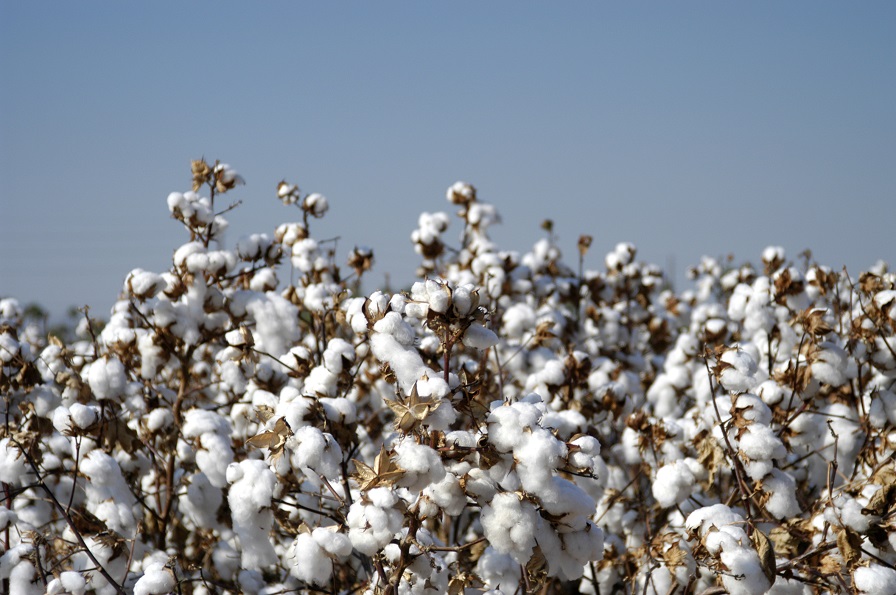
“But cotton prices do have a chance to move back up into the $1 range. If that happens I think we’ll be looking at a drop of 10% to 12% in acreage.”
Quinn was quick to point out that the U.S. wouldn’t be the only country scaling back on cotton production in the 2012 growing season. He reported that China has indicated the country will reduce their cotton acreage by as much as 9%.
“In fact, you’re looking at global production numbers potentially dropping 7% to 8%, or down to 82.1 million acres planted,” Quinn said.
Quinn has a keen eye on the international factors that will impact the cotton market in 2012. In more ways than one, that means staying focused on China.
Export sales are a prime example. Although the export market saw cancellations of nearly 1.7 million bales since the marketing year began, Quinn says they have already been recycled back into the U.S. export market and the U.S. industry is still achieving good sales.
Those positive gains were made possible largely by a strong import market from China, according to Quinn.
“We began the marketing year with 6.9 million bales, and all of the increased sales to China. These were driven by Chinese government purchases for national reserves in October and November, and into December,” Quinn said.
With total purchases of the U.S. national reserves standing at around 2.4 million bales, the U.S. balance sheet would see a slight influx of stocks. The end of the year could see 3.5 million bales in ending-stocks, which is a spike from recent years, although Quinn points out that ending-stocks were historically low in recent years.
“That number is not terribly overburdened, but it is certainly more than the last couple of years,” Quinn said.
Global Balance Sheet
The U.S. isn’t the only place where production has outpaced consumption. A look at the world balance sheet numbers reveals a similar pattern.
World cotton production in 2011 was pegged at 123.4 million bales. A December USDA report estimated 2011 world cotton mill-use at 111.3 million bales. A month-by-month analysis of revisions done by USDA shows that estimates have been reducing over the past two months, and in particular in the December world supply and demand report, according to Quinn.
In that period, world mill consumption estimates were reduced by three million bales. Quinn says that number reflects some growing uncertainty in the global economy. The expanding gap between global production and consumption could ultimately impact the U.S.’s ability to export its cotton crop, he says.
“It could be indicative of difficulty in exporting cotton, but our exports are doing great. I find that fascinating,” Quinn said. “We wind up with a world balance sheet where we find ending stocks are approximately 57.7 bales, an increase of 12.2 million bales and a stocks-to-use ratio of 52.8%.
“That in itself is not a bullish number, by any means, to have that great of an increase at the end of the year,” Quinn said.
Increased stocks-to-use ratios won’t be the only factors dogging cotton in 2012. Quinn said we could see a lingering “demand destruction hangover” where consumption slows. European debt and liquidity issues could also hound the market in the coming year.
But for all the bearish signs that could hamper the cotton market in the coming year, Quinn says there is still reason for optimism. The March contract provided just that in early January.
“In spite of all the concerns and in spite of all the negativity surrounding the business activity, March cotton closed above a trend line, and it hasn’t been able to do that since June,” Quinn said. “That will start to get the funds to notice cotton again.”
The December contract is showing signs of strength as well. Quinn says the U.S. will still see some reduced acreage, though that will be tampered as long as the December contract remains resilient.
There are several bullish factors for cotton on the horizon, according to Quinn. Ongoing weather concerns will serve to help the market, as will supply chain inventory. The buying intentions of Pakistan could also turn into a huge boon for the market. Fiscal and monetary policy actions from governments that increase inflation around the world could support the cotton market as well.
“If good prices continue, you’ll start to see some growers selling, and I think that will probably be a smart thing to do. It’s a good place to start, if you haven’t already,” said Quinn.
GET THE NEWSLETTER TODAY!