

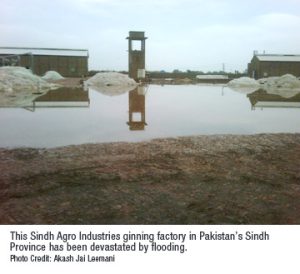
About half of the 4 million to 5 million bales of cotton produced annually in Pakistan’s Sindh Province have been damaged or destroyed by severe flooding, but that’s a small concern compared with the horrifying amount of human suffering that it left behind. Hundreds of thousands of people have lost their homes, their ability to earn a living, and for many, their lives.
The monsoon season began in mid-August, a few weeks later than usual, and delivered heavy rains until the end of the month. Cotton is cultivated along the west side of the Indus River as it flows out to the sea, and the troubles began when a second monsoon came in early September. Over the course of four days, clouds dumped more than 31 inches (800 millimeters) into the region. Rather than all of the water flowing down the Indus and out to sea, the excessive rains caused to sea to flow inland, pouring over the canals and devastating the farmers who live there.
“About 1 million bales have been damaged, but 1.5 million to 2 million bales have been completely destroyed,” said Akash Jai Leemani, marketing manager for Karachi-based Sindh Agro Industries, during an interview with Cotton International. “It’s especially heartbreaking because the growers can see the cotton, but they can’t get to it.”
The natural disaster will reduce Pakistan’s production to about 13 million bales this season, an increase of about 10 percent from last year.
“The cotton is all handpicked, and shortly after the rains stopped, some people tried to wade through the water and pick the cotton. But there are poisonous snakes and insects in the floodwaters, and many of those who tried were killed. The water is also causing the spread of diseases such as malaria and dengue fever,” Leemani said.
The economic losses will number in the billions of dollars, and for the Sindh Province, the damage is many times worse than what they suffered from last year’s flooding. Leemani says the government and military are doing everything in their power to assist the residents, who had expectations of a prosperous season.
“People still haven’t recovered from last year’s damage, and this year’s disaster has left many people completely penniless,” Leemani said. “But even though they are hungry and homeless, they have no alternative but to stay and try again next year. This is their livelihood, and they have nowhere else to go.”




Leave a Reply