

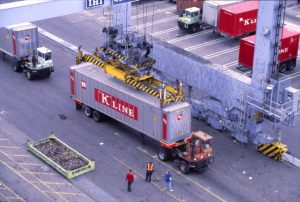
Volatility in the ever-changing cotton market, especially considering the high levels recorded in the last two years, needs to be analyzed from various standpoints. This includes considering many activities that have a direct and indirect impact on price and marketing conditions. This article focuses on the impact of volatility on logistics, in particular logistics in Argentina.
For a better understanding of the local scenario, it is appropriate to describe certain aspects of cotton, when it is viewed as merchandise to be shipped. Cotton has historically been considered a highly appreciated cargo by shipping companies in the region for three main reasons (from a shipping perspective, very few products gather so many positive attributes):
1. Big volumes are attractive.
2. The high stowage factor (cubic meter/ton) and light weight (12.5 tons/TEU [20-foot equivalent]) is extremely important, considering that South America-East Coast schedules tend to be mined by low-draft ports.
3. The vast majority of cotton cargo is destined to ports in the Far East (especially China, Taiwan and Southeast Asia). Coincidentally, most of the exports in the region are containerized, manufactured consumer goods and industry supplies. As a result, shipping companies are always eager to reposition empty containers back into Asia, where there’s a high demand for them.
As a consequence of the global financial crisis and the slowdown in trade, ocean freight rates – especially to the Far East – have settled at the lowest level in years. Considering that the lower the cost of freight, the higher the free on board (FOB) value, this is good news for producers, in terms of price.
In Argentina, the 2011 crop was ready to be shipped as the market level was falling from the historic records reached during the first three months of the year. This means that most of the cotton to be shipped was sold at significantly higher prices than the price level at the time it was loaded on board.
With such high market price differences, shipping in due time and proper form became a very serious challenge. All aspects of the logistics process were finely adjusted to reassure sellers that their product would be shipped during the scheduled timeframes.
Added to this, very low stock levels, insufficient lines of credit, and other circumstances surrounding the spinning industry increased the pressure for every shipment to be made without delay, in the shortest transit time as possible, strictly complying with special documentation requirements (many of which are usually not accepted by the shipping companies), and to specific port terminals within each destination.
Performing under Pressure
Most of the 2011 crop shipments have been performed under these conditions. Yet, as per our records, no failures have been registered despite the fact that over the last seven years, Argentina has been almost absent from the cotton export market.
Good performance has been the result of:
• many years of experience with considerable export volume, and
• logistics in Argentina is exclusively handled by logistics operators.
As a result, variables can be adjusted in a quicker, more accurate and reliable way. Positive results in such a particularly difficult year demonstrate that Argentina is a reliable country when arranging a shipment schedule.
Within the context of the global macroeconomic scenario – with such financial limitations, short stocks, wandering variables and unforeseeable turn of events – counting on reliable and predictable logistics is of vital importance and can be directly transformed into competitive advantage.





Leave a Reply