
U.S. Faces New Pressure on Cotton Subsidies

Once again, the United States is facing pressure from international sources to reduce its cotton subsidies. At the same time, domestic financial concerns may make a change to subsidies necessary.

According to a report in the Economic Times of India, India, China and Argentina recently warned the United States that the ongoing negotiations for a global trade deal “could be in trouble” if the U.S. does not commit to reducing its cotton subsidies. Some believe that these subsidies allow U.S. farmers to undercut the price of cotton, providing an unfair market advantage, especially over cotton farmers from poorer nations.

The Economic Times report notes that the “Cotton-4 group of African countries including Benin, Burkina Faso, Chad and Mali are leading the opposition to the US cotton subsidies.”

The report also cites a World Trade Organization official as saying “We now want the U.S. to spell out explicitly how it plans to reduce cotton subsidies under the WTO. The U.S. had agreed at Hong Kong (in 2005) that it would reduce cotton subsidies at a higher and faster rate than other farm subsidies, and it has to respect its commitment.”

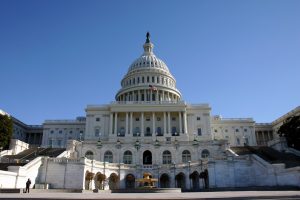
In Washington D.C., U.S. lawmakers are saying that reduced subsidies for cotton may be included in the next farm bill as a cost-saving measure. The country is facing record deficits. According to Bloomberg.com, House Agriculture Committee Chairman Collin Peterson noted at a hearing on the farm bill, “We’re not going to have any new money; we’ll probably have less money.” Peterson has stated that he wants the next farm bill approved before September 2012, a year before provisions in the current measure expire.
 

Top Articles
North Carolina Producer David Dunlow Tabbed for 2026 Cotton Achievement Award

0

Leave a Reply

Avatar for Anonymous Anonymous says:

USA has been able to successfully prevail upon other cotton producing countries especially the poorer ones to reduce or abolish subsidies to farmers. Not so much as the external pressure, but the internal pressure of economic crisis that the USA will be forced to put in effect curtailment of subsidies given to its cotton farmers. This in turn will lay a more level playing field for other producers

Avatar for Anonymous Anonymous says:

I believe that subsidies to cotton growers are at present quite an absurd, they had a sense when there were thousands of smal growers who needed an incentive, I remember back in 1952 in South Front Street in Memphis there were small shopa with one or two bales on sale in the window. Now cotton growing is like a big industry, they have to decide themselves whether it is worthwhile or not to grow cotton, without using the money of the taxpayers.

Avatar for Anonymous Anonymous says:

The hyprocrisy of hearing China, India, and Brazil criticize the U.S. for cotton subsidies is mind-boggling, and shows how little those who criticize understand the true facts. The Step Two payment was ended in 2006, eliminating the Brazilian’s main complaint about the U.S. program. Because the U.S. cotton program is constructed as a safety net which only operates in times of very low prices, in seasons like the last two, the only benefits paid to producers of cotton are the same as those paid to producers of any crop in the U.S. Only Direct payments are made, and these are small and are “green box” under WTO rules. Meanwhile, China, India, and Brazil continue to enact subsidies to their agricultural sectors and their industrial sectors “at will”, changing the rules and the tax rebates and the support prices whenever they get a little internal pressure. They then try to point the finger of blame at the U.S. to hide the WTO incompliant steps they themselves are taking. What self-serving hypocrisy!@

Avatar for Anonymous Anonymous says:

USA has been able to successfully prevail upon other cotton producing countries especially the poorer ones to reduce or abolish subsidies to farmers. Not so much as the external pressure, but the internal pressure of economic crisis that the USA will be forced to put in effect curtailment of subsidies given to its cotton farmers. This in turn will lay a more level playing field for other producers

Avatar for Anonymous Anonymous says:

I believe that subsidies to cotton growers are at present quite an absurd, they had a sense when there were thousands of smal growers who needed an incentive, I remember back in 1952 in South Front Street in Memphis there were small shopa with one or two bales on sale in the window. Now cotton growing is like a big industry, they have to decide themselves whether it is worthwhile or not to grow cotton, without using the money of the taxpayers.

Avatar for Anonymous Anonymous says:

The hyprocrisy of hearing China, India, and Brazil criticize the U.S. for cotton subsidies is mind-boggling, and shows how little those who criticize understand the true facts. The Step Two payment was ended in 2006, eliminating the Brazilian’s main complaint about the U.S. program. Because the U.S. cotton program is constructed as a safety net which only operates in times of very low prices, in seasons like the last two, the only benefits paid to producers of cotton are the same as those paid to producers of any crop in the U.S. Only Direct payments are made, and these are small and are “green box” under WTO rules. Meanwhile, China, India, and Brazil continue to enact subsidies to their agricultural sectors and their industrial sectors “at will”, changing the rules and the tax rebates and the support prices whenever they get a little internal pressure. They then try to point the finger of blame at the U.S. to hide the WTO incompliant steps they themselves are taking. What self-serving hypocrisy!@