

Henry Gantz, our illustrous senior editor, just dropped me a line.
“The corn is burnin’ up down here,” he says. “About the only safe corn down here is in Louisiana. And where they have irrigation, the center pivots never shut down.”
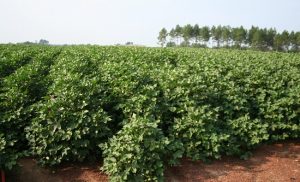
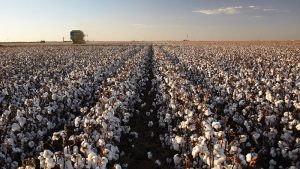
Well, I heard it said a million times at the Beltwide Cotton Conferences, and again a month later at the Commodity Classic, the annual gathering of corn, wheat, and soybean growers – people saying, “At what point will growers in the Mid-South and Southeast wake up and remember exactly why the region’s grown cotton for more than a century?” An unrelenting dry spell has certainly served as a rude awakening, and I would guess assures a return to cotton in 2008, if perhaps at a lower acreage baseline.
Agriculture does have a tendency to love prosperity to death. This past winter, corn seemed to hold the key to prosperity in uncertain times, and cotton growers rushed to it. Frankly, who could blame cotton growers for running to it? We’ve had some turbulent years growing cotton, and with so much uncertaintly about the Farm Bill and global markets, corn seemed like a sturdy port in a storm.
They’ve embraced corn in the Midwest at record levels in the “post-modern hybrid era” as well, contributing the majority of the more than 91 million acres of corn now well on its way to harvest. And, of course, the exuberance is driven by the frenzy over corn ethanol.
With so much hype surrounding it, I’m willing to bet you’re all pondering the same question I have about the ethanol boom: When will the madness end? Which trend, vulnerability, blind spot, etc., could “deep six” the boom that has rearranged the cosmos for U.S. agriculture?
Most experts agree that virtually nothing could serve to derail the “biofuel” movement, with “biofuel” being the operative word. But what happens between now and the real ultimate destination – a biomass-to-fuel production system that produces biofuel at a reasonably consistent level of profitability, not to mention without the ethical baggage and economic impact of the food vs. fuel question – could serve to be a pretty bumpy ride.
In the grand American tradition of celebrating success one day only to wake up the next morning and rip it to shreds, ethanol is taking it full on the chin the days. Despite its amazing accomplishments to date, the ethanol movement has more recently been characterized as strictly a gold rush for greedy businesses to try to cash in on something that will prove completely impractical in the long run.
While it would be naive to assert that there aren’t gold diggers in the ethanol fray, let’s take a deep breath here. For many, many years, the ethanol movement existed in a state of suspended animation in the U.S., waiting for an opportunity to cash in on its hard work. Who could blame the industry for its exuberance?
Simultaneously, growers have rapidly embraced corn production in an effort to feed the 115 bioenergy plants currently online, and 79 under construction.
Now, a whole host of factors are weakening the walls of the continuously inflating corn ethanol balloon. The world, as well as earmarked funding in the Bush administration’s farm bill proposals, target cellulosic production methods. Midwest land values continue to rise, tapping into farm profitability. The prospect of $4 corn might have growers salivating, but it threatens to cripple the ethanol plant’s ability to operate profitably. New plants under construction now cost significantly more than their predecessors, consequently extending the payback timeframe by years.
Then, of course, there’s the “food vs. fuel” issue. Consumers are being told alternately that food prices are going up because of corn going to ethanol, and then because of the cost of energy in general. If food prices do increase beyond the point of consumer tolerance, and the media decides to create a villain out of the ethanol industry, it won’t matter much who’s right or wrong.
All challenges aside, biofuels are here to stay. But all signs point to a market “correction” in the not too distant future that will once again challenge U.S. agriculture to adjust and adapt.




Leave a Reply