




The Data Already Growing Your Cotton
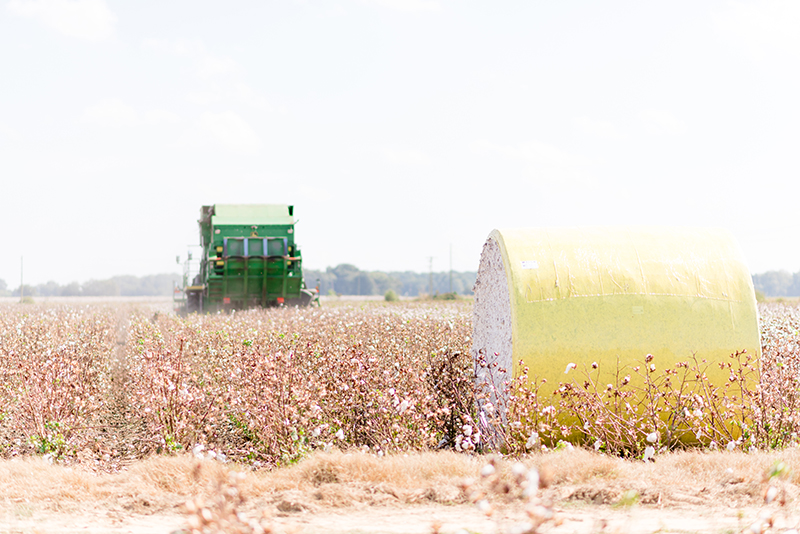
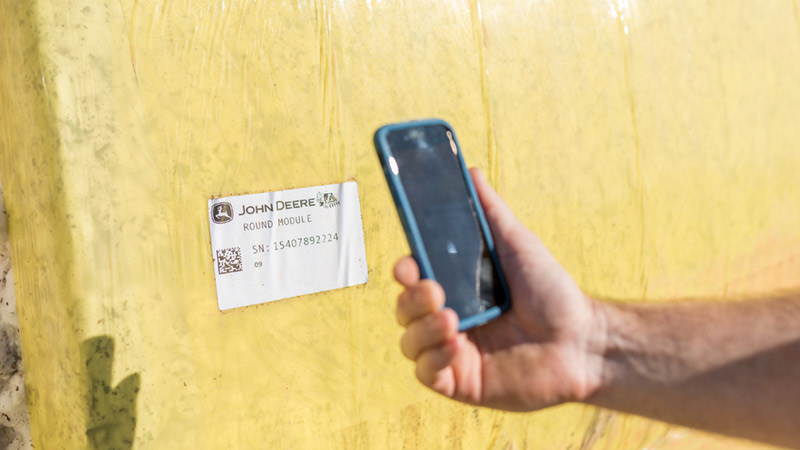
When a round cotton module rolls out of the harvester, it already carries more than cotton. Embedded in its wrap are RFID tags that give the module a unique digital identity, which became more common since round-module-building harvesters became commercially available in 2009.
For Dr. Ed Barnes, agricultural engineer and senior director of agricultural and environmental research at Cotton Incorporated, that created an opportunity hiding in plain sight.
“When RFID technology became available, I thought the challenge would be getting RFID tags on all these modules,” Barnes recalls. “Then all of a sudden, John Deere had done it for us.”
Today, an estimated 80% of U.S. cotton is stored in round modules. Yet limited software support has meant the RFID tags embedded in those modules remain largely underutilized.
Cotton Incorporated saw an opportunity to change that.
Connecting cotton from field to gin
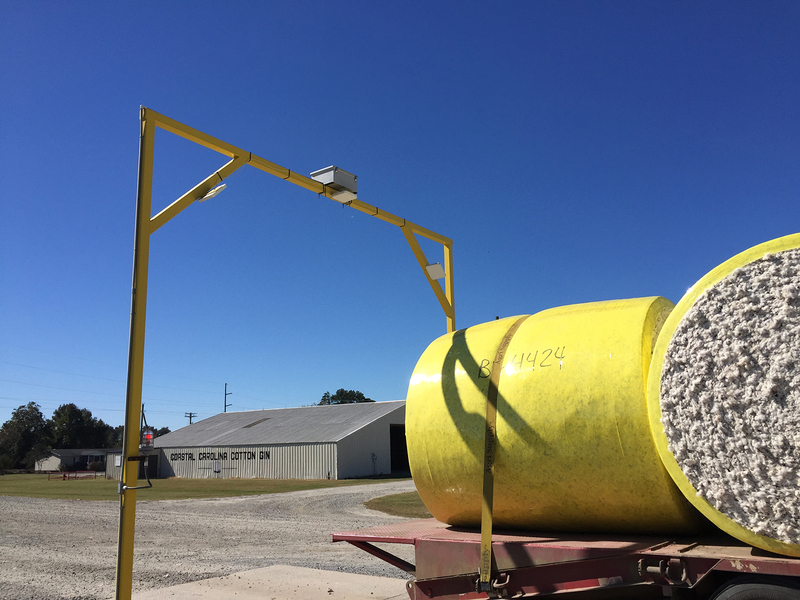
Over the past decade, Cotton Incorporated has supported research aimed at using RFID to electronically maintain a module’s identity as cotton moves from harvest through the gin.
The work has been highly collaborative. Barnes credits Dr. John Wanjura with USDA-ARS as the technical lead, working alongside university researchers, programmers, growers, ginners, private industry and cotton organizations across the Cotton Belt.
Together, the project partners developed open-source hardware and software tools and tested them in commercial gins. The resulting Electronic Module Management system has been successfully used at gins in Texas, Louisiana, Missouri, North Carolina and Georgia.
For growers and ginners, one of the simplest potential benefits is replacing a surprisingly manual process.
Modules already carry unique RFID identification, yet growers may still add a paper gin ticket containing information such as the grower, farm and field. That information then has to be manually entered again at the gin.
With RFID-enabled data transfer, information recorded electronically at harvest can follow the module instead — reducing duplicate data entry, transcription errors and time spent labeling and tracking cotton.
From tracking cotton to learning from it
Identifying modules is only the beginning. Maintaining that digital connection through ginning allows researchers to link the USDA classing information from finished bales back to the approximate area of the field where the cotton originated.
The result is something growers already understand in a new form: a fiber-quality map.
Researchers have used RFID and classing data to visualize within-field variation in micronaire and loan value, identify areas receiving seed coat fragment calls and develop more accurate profit-and-loss maps.
That creates the potential to ask a different set of questions.
If cotton from one area receives a lower grade, why? Did harvest moisture play a role? Could variety, soil, pests or another management factor be contributing?
In one example Barnes shared, linking harvest moisture with color-grade discounts gives growers a way to see the potential economic impact of harvesting cotton when moisture is too high.
The next chapter
RFID adoption remains early. Barnes estimates only about 20 of more than 400 U.S. gins are currently using the technology despite much of the technical research and demonstration work having been completed. The challenge now is helping growers and ginners understand the value.
There are signs of momentum. Commercial gin-management software can now support RFID data, fiber-quality mapping is commercially available and companies continue developing RFID-enabled tracking and data-management capabilities. CottonTech, for example, recently announced plans to build its GinLogistics platform toward RFID-enabled tracking, enhanced data capture and decision support for growers and ginners.
For Barnes, the opportunity ultimately goes beyond eliminating paper tickets.
As cotton production becomes more automated, the information connecting each step must move just as seamlessly.
“Before you can automate physical processes, you’ve got to automate the data flow process,” Barnes says.
That may be RFID’s greatest potential: turning technology already riding with the cotton modules into information that can travel full circle — from the field, through the gin and back to the grower.
With questions or to follow future research, visit cottoncultivated.cottoninc.com.