



Cotton Genome Research Conference Yields Results
 October 30, 2012
 The 2012 International Cotton Genome Initiative [ICGI] Research Conference was held October 9-12 in Raleigh, NC. 132 cotton genomic and genetic experts from 11 countries gathered together to share state-of-the-art scientific discoveries about cotton diversity, genetics, genome sequencing, and gene identification/function.
This was the 8th biennial ICGI Research Conference, but the first to be held in the United States – the third largest cotton producing country in the world behind China and India. To enhance the experience for conference attendees, tours were offered of Bayer CropScience’s Innovation Center, Medicago’s plant- based protein production site, Monsanto’s Plant Sciences Research Facility in Research Triangle Park and Cotton Incorporated’s World Headquarters in Cary. Tours concluded at the North Carolina Biotechnology Center with an overview of public and private sector biotechnology activities across the state.
“This was a watershed meeting for the cotton community in that it coincided with the completion of the first diploid (two sets of chromosomes) cotton genome sequence. Sequencing of Upland cotton, a tetraploid (four sets of chromosomes), is currently underway using knowledge gained from the diploid,” explains Dr. Don Jones, Director of Agricultural & Environmental Research for Cotton Incorporated and host of the conference.
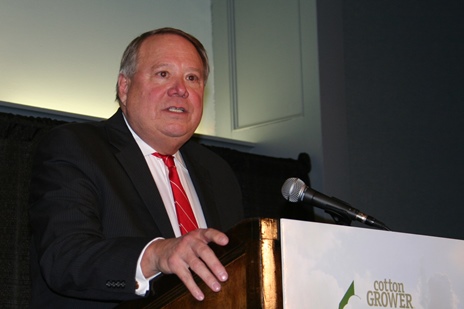
The conference was opened and attendees greeted by North Carolina cotton producer/ginner Taylor Slade, Dr. Don Jones and by the ICGI Chair Dr. Andrew Paterson, who also presided over the plenary session and contributed an update on cotton genome sequencing. A presentation was given by Dr. Jonathan Wendel, winner of the 2012 ICGI Award for Outstanding Contributions to Cotton Research, who offered an informative tribute to scientists who have contributed to our understanding of the diversity of the cotton genus and origin of the crop plant, including its taxonomic and genomic history. Many of the conference’s talks appeared “futuristic”, reflecting numerous and rapid advances in many enabling genomic technologies that have become available in recent years.
This futuristic tone is readily identified from the titles of the presentations, which included: “DNA Sequencing of Many Gossypium Species”; “The Dynamics of Virus-Induced Gene Silencing in Cotton Fiber”; “Phytochrome RNA Interference Enhances Major Fiber Quality and Agronomic Traits of Cotton”; “Exploring the Genetics of Adaptive Traits in Cotton with a Next-Generation Platform”; and “Transcriptomic Approaches for the Identification of Drought-Responsive Genes in Cotton”.
Although these titles and many others may sound like Greek to most of the public, speakers emphasized the importance of communicating scientific progress to those outside of science. The keynote lecture, delivered by author Ms. Susan Dworkin, was entitled “Talking to the City: Breaking the Information Barrier for Agriculture”. Concluding remarks by Mr. Gwyn Riddick from the North Carolina Biotechnology Center touched on the dual need for cutting edge science coupled with effectively communicating these advances to those outside of the scientific community.
“It is imperative that we as scientists communicate our on-going results and breakthroughs to both cotton growers and the general population so the connection between research and new products is more easily understood,” explains Jones.
Woven throughout the conference were presentations on genome sequencing and the use of modern genome technologies in meeting the needs of cotton growers as well as consumers of its fiber and seed.
“Many issues facing cotton growers, such as sustainable production, pests, and diseases, will be solved with field application of much of the research results discussed at the conference,” concludes Jones.
So the next time you hear about a scientific conference convening here in Raleigh, rest assured that bringing international experts together to share advances in cotton science will ultimately jump-start solutions that enhance “The Fabric of Our Lives”.
GET THE NEWSLETTER TODAY!