



Cotton’s Great Message
 February 25, 2009
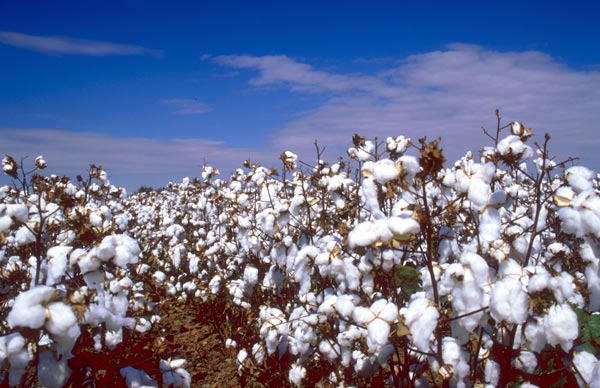
 They used to give me chills. I was as a typical city kid from up north, and didn’t understand a thing about how cotton was grown or harvested or made into my vast wardrobe of t-shirts and jeans. But those old “Fabric of our Lives” commercials communicated two distinct impressions on me that endure – virtually everyone, everywhere in America will encounter the benefits of cotton on any given day. And second, it’s a fiber that’s produced right here in the good old United States. Having grown up in the shadows of closing steel mills and struggling automobile plants in northeast Ohio in the late 1970s, it was comforting to see something born in U.S. soil still making such a positive impact on our lives.
I got to thinking about it after reading about last month’s Cotton Sustainability Summit that was hosted by the Cotton Board and Cotton Incorporated. At the heart of the Summit were discussions about how to dispel myths and tell a more accurate story about how cotton is produced. There are good messages out there to be sure, but how can they be tied together to deliver a cohesive message?
Putting Out The Message
Here at Cotton Grower magazine, we’ve been on the front lines telling the positive stories in the cotton market for decades.
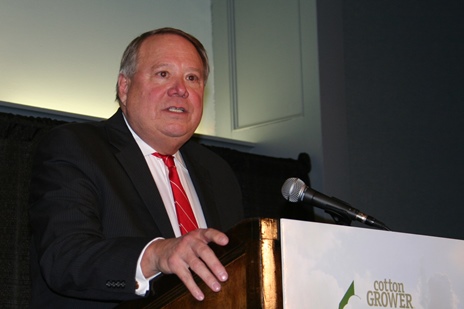
Right now in fact, we’re preparing to honor another grower with our annual Cotton Achievement Award, which caused me to look back at the list of past recipients. It’s a varitable Who’s Who in cotton production, as well as service to the industry. I was particularly proud to see that two of the speakers featured that the Sustainability Summit – Don Cameron and Larkin Martin – were past Achievement Award recipients.
And their messages are inspirational on a grower level, and influential to anyone on the outside looking in. Larkin Martin talked about challenging the notion of “corporate farming,” and how personally important it is to her to use farming practices that protect the land, her family and her community. Specifically, she noted that her farm is “heavily involved in using genetically enhanced seed and precision farming technology to reduce chemical inputs – and that’s a standard for the majority of U.S. cotton farms.”
Don Cameron, who produces both conventional and organic cotton in California, talked about his commitment to stewardship and the environment in both production methods. “The challenges we face with organic farming, however, are lower and more variable yields, an increase of water usage, the lack of available of labor for hand weeding and the increased costs involved therein,” he said. “We’re continually working to find more alternatives to these issues, but the cotton industry as a whole has come a long way and can proudly hold its head up high.”
Many cotton growers have similar stories to tell, and celebrating and communicating these positive messages has been and will continue to be a focus of Cotton Grower magazine. To all of you who’ve shared your expertise on the pages of our magazine, we thank you and look forward to bringing more positive success stories to light in 2008.
Add photo
GET THE NEWSLETTER TODAY!