



Demand Playing Catch-Up With Supply As U.S. Cotton Acres Dwindle
 March 17, 2009
 At the Mid-South Farm and Gin Show, held in early March in Memphis, Tennessee, Joe Nicosia, CEO of Memphis-based Allenberg Cotton Co., replaced the iconic Billy Dunavant as the presenter of the 2007 Market Outlook for the coming year.
Nicosia promised to make it a journey, and started with the obvious: “As we look forward, I think we can sum it up in the main headlines — the new challenges from grains and soybeans. Right now cotton is not very dynamic, and it is putting stress on the system.”
Unlike U.S. cotton, of which over 70% is exported, 80% of U.S. corn demand is domestic. Ethanol production demand has increased by 600 million bushels this year, and Nicosia’s trade sources say that could increase to 1 billion bushels in 2008. To meet the demand, 10 million more acres of corn will be required.
And that increase is coming in the U.S., Nicosia said. “Price response will do that. Corn futures are over $4 per bushel and soybean prices have risen to $8 per bushel. That will put acreage into corn and soybeans to meet the demand,” he explained. “The job of the market in the United States is going to be to curtail cotton acreage to grow more oil seeds and corn, period.”
The Global Situation

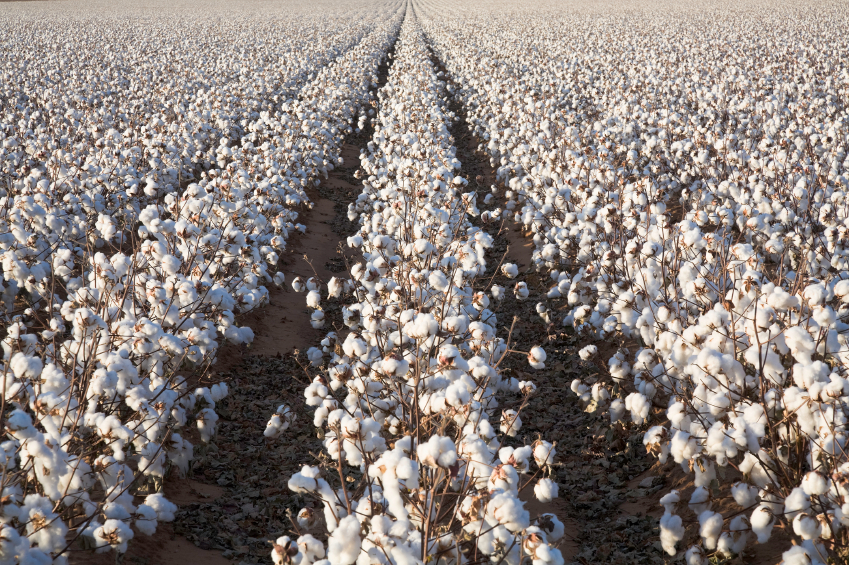

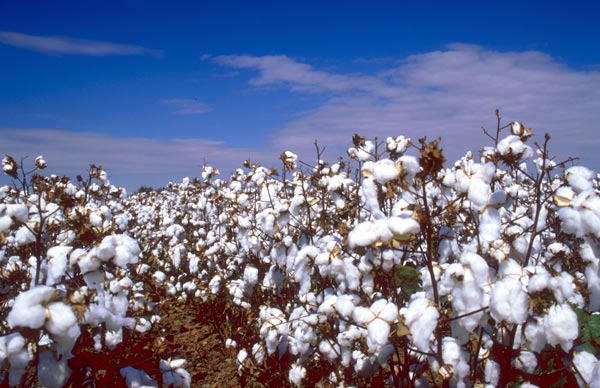

Worldwide, Nicosia said Brazil comes closest to the U.S. in terms of making a reasonably easy transition. “But in India and Pakistan, it gets up to 120 degrees, and there are not a lot of alternatives to cotton,” he added. Additionally, China has backed away from ethanol production because of demand from its own people for food. Said Nicosia: “They are concerned about converting food into energy because the last thing they can afford to do is run short on food.”
So the world in general is not reacting to high U.S. corn prices, for one reason or another, and we will not see a substantial decline in world cotton acreage. Coupled with a huge American crop in 2006 of 21.7 million bales and the increase in the world’s yields as a whole, cotton stocks draw-down will not be enough to rally prices in the short term.
China, India, Brazil and the U.S. all had very good crops in 2006. “We see that continuing,” Nicosia said. “But with demand continuing to increase, there will be a small draw-down in world stocks.” Based on beginning stocks of 54.2 million bales, 118.6 million bales of production, 120 million bales of consumption, and allowing for “unaccounted for” bales (due largely to China’s reporting system), ending stocks for the end of the next marketing year will drop about 500,000 bales.
So if there is hope for improvement in world cotton prices, where is it? Despite record increases in production, demand is outstripping it, meaning that the gap between production and demand has begun to widen.
“Ultimately, (world cotton demand) is your savior,” Nicosia told his American audience. “It will take a while to get there, but this is it. What you are looking at, despite everything, is a growth chart (in demand) that is going straight up, extremely quickly. The projections are that the world is going be massively deficit in cotton.”
That could lead cotton prices to “explode” said Nicosia, as speculative fund traders ride the bull. “People will buy the long-term story,” he continued. “There is no way in the world we can take production … and chase this (demand) line unless we can find millions of acres around the world.”
The world production spike of 119 million bales in 2003/04 has now been trumped by a projected demand of 124 million bales as we begin a new marketing year. “At first people thought the spike in production was a quirk, but they were wrong. Production has been stable,” Nicosia said. “Demand is pulling away from production and the question is whether yields can keep up. If not, the production and demand lines will separate even more and world stocks will continue to decrease.”
U.S. Acreage Downturn Imminent
In January, sister publication Cotton Grower magazine’s annual U.S. Acreage Projection Survey predicted 13.5 million acres of cotton for this season in the U.S. At the National Cotton Council (NCC) Annual Meeting in February, NCC pegged acreage at 13.21 million. By March, Allenberg’s estimate was 12.5 million acres. The biggest hit came on March 31 when USDA pegged acreage at 12.147 million acres, down 20% from 15.274 in 2006.
In 1995, average yield in the U.S. was less than 550 pounds per acre. That spiked to over 850 pounds in 2004, then dropped back slightly to around 825 pounds this past season.
So where will 12.5 million acres planted this year in the U.S. take us using the current average yield? Nicosia answered with still more questions: “Is 12.5 million acres enough? Too much? Or too little? If you take beginning stocks of 9.4 million bales, usage of 21.7 million for next year – 4.7 million for domestic consumption and hopefully 17 million for export – and a normal yield of 19 million bales, where does that take us? If you look at the supply/demand balance sheet for the 2007/08 crop, this will take ending stocks down from 9.4 million bales to 6.7 million.
“On the usage side, we are struggling with exports,” Nicosia explained. “We lost Step 2. Our most important customer was China, and in 2004/05, we had 50% of the (Chinese) market share. The next year – 2005/06 – we had 47%. Going into August 2006 at the end of Step 2, we took 69% of the market share.” But by the end of December of 2006, that had dropped to 16%.
Nicosia pointed to a USDA and Congressional Budget Office projection that said the loss of exports would be minimal after Step 2 – “200,000 to 250,000 bales,” he said. The American Cotton Shippers Association (ASCA), in defending the Step 2 program, said the U.S. would lose 1.7 million bales at a cost of $800 million. “Today we know that our exports will go down by 4 million bales,” explained Nicosia. By doing the necessary calculations using ASCA numbers, that could mean a loss of $1.8 billion.
Based on a 21.7 million-bale domestic crop, five million bales of domestic consumption and exports of 14.5 million bales, carryover will jump from 4.7 million bales to 8.3 million bales by the end of this marketing year. That’s what USDA says. Allenberg projects the carryover to be closer to 9.4 million bales.
GET THE NEWSLETTER TODAY!