



Egypt’s Staple Commodity Provides Fiber, Food, Jobs
 February 23, 2012
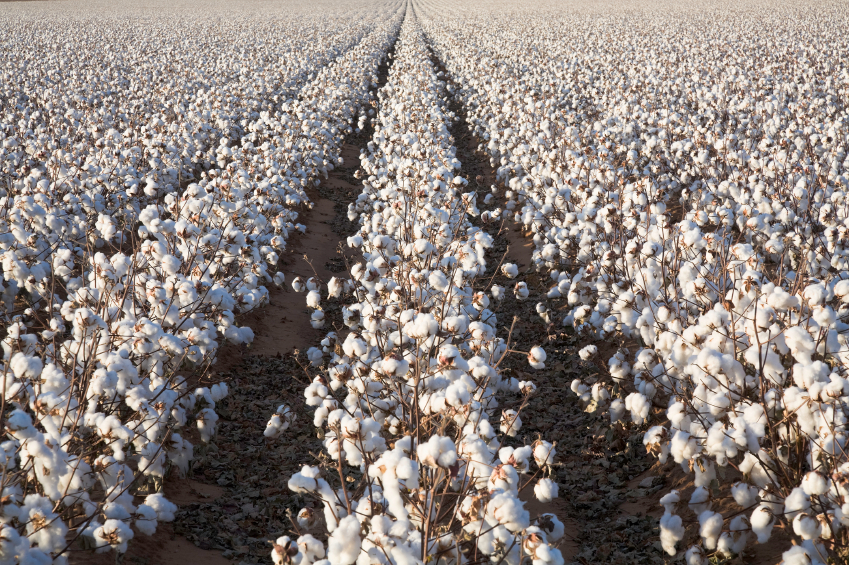
 Egypt has historically been linked with extra-long and long-staple cotton with characteristics unmatched by other cottons. Cultivated area in some years reached almost 840,000 hectares and production in some seasons reached approximately 10 million pounds.
In the Egyptian economy, cotton is viewed as an industrial, agricultural and food crop that provides plenty of opportunities to work in all of its handling stages from cultivation, harvest and ginning, to manufacture and export as raw material, and to cottonseed as a food industry for humans and animals. In developing countries, including Egypt, labor-intensive crops and industries contribute heavily to providing jobs and offsetting unemployment when the national economy is suffering.
From this point of view, attention to scientific research in the Egyptian universities (the Faculty of Agriculture and the Faculty of Engineering) and the specialized institutes in this field – in addition to the establishment of the Cotton Research Centre in the Ministry of Agriculture – has focused on developing high-quality, high-yielding varieties and continuous updating of varieties and breeds.
Since 1994, when the economic system in Egypt changed to a free economy, regulations were issued to suit the new economic stage with the hope of achieving positive results for cotton cultivation and trade. But the practice resulted in some negative effects, that required review and reform.
Today, the government specifies certain varieties for each growing region, and the Ministry of Agriculture is the sole distributor of cottonseed.


Four varieties are currently grown. In the governorates of Upper Egypt, Giza 80 is grown in Beni-Suef and Menya, and Giza 90 in Fayoum, Assiut and Sohag. These varieties are characterized by the following qualities:
| Giza 80 | Giza 90 | |
| Length | 29.80 | 28.20 |
| Strength | 35.80 | 33.50 |
| Micronaire | 4.11 | 4.08 |
The Giza 88 extra-long staple variety is grown in Behira, while the Giza 86 long variety is produced in the eight governorates of North Egypt (also known as the Delta).
These varieties are characterized by the following qualities:
| Giza 88 | Giza 86 | |
| Length | 35.30 | 31.90 |
| Strength | 45.10 | 43.10 |
| Micronaire | 3.85 | 4.22 |
Cultivation of cotton begins in March and harvest starts in September/October. Agriculture in Egypt depends on irrigation.
Looking at the spinning specifications of Egyptian cotton, we find that it excels when compared with growths from the rest of the world in the same class, especially for yarn.
As the speed of spinning machines increases, all spinning systems need to run cotton with high strength, especially in the production of thin yarn. Egyptian cotton possesses that fiber-spinning advantage.
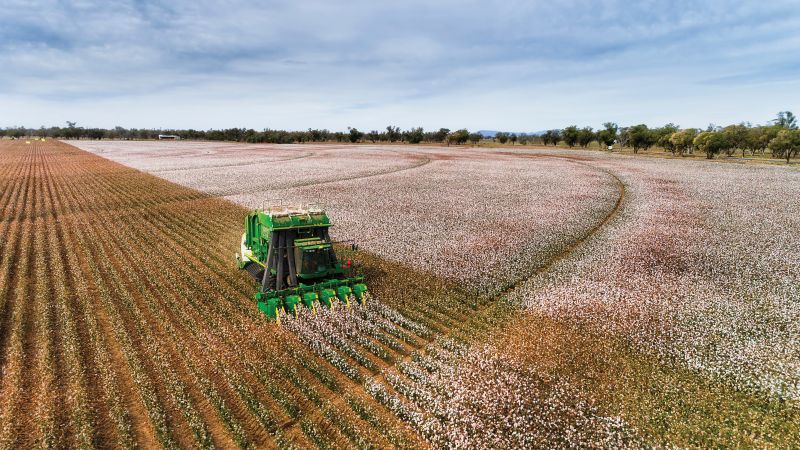
Finally, the hand picking of Egyptian cotton causes minimal damage to the fibers and is characterized by good preparation practices in Farfara before it is pressed into bales. This system does a very good job of reducing the amount of trash and impurities, which adds another comparative advantage for Egyptian cotton.
GET THE NEWSLETTER TODAY!