



U.S. Partnership Increases Access To The Chinese Market
 February 10, 2009
 Everyone knows that China is the new market for U.S. cotton. Its spinning capabilities and consumption levels are rising, and more domestic American cotton is shipped to China than ever before. With the abatement of traditional mill markets for U.S. cotton, China’s role in filling the gap has been a key asset to the U.S. grower.
But as merchants sell cotton to Chinese mills, the market presents a wide spectrum of issues that must be considered. Is comprehensive, global insurance available in the Chinese market? Are private warehousing and inventory systems reliable? Who can I trust in a market that is so new, unfamiliar and vastly different from traditional markets?
When navigating the uncertain and untested waters of a new business environment, a familiar name and trusted business partner with industry experience can be your best ally. For merchants exporting cotton to China, MWR offers that familiarity and trust three-fold. MWR is the new cooperative effort in China for Mallory Alexander International Logistics, Wakefield Inspection Services and Rekerdres & Sons Insurance — three of the most well-known names in U.S. cotton services. The partnership handles logistics, inspection, insurance and warehousing in six Chinese cities — Qingdao, Xingang, Shanghai, Zhangjiagang, Ningbo and Huangpu — with 24 warehouses storing cotton last year. And MWR is considering opening operations in other countries, especially in India and Brazil, as the need arises.
For cotton merchants who want to capitalize on the consumption growth in China but don’t have infrastructure in place, MWR gives them not just one name, but three names they can count on. By combining each company’s expertise, MWR offers merchants a chance to explore new avenues of business in a Chinese market that is infamous for its uncertainties.
“About two years ago, we were sitting around chatting about the history of our three families, and discussing how the Mallory, Wakefield and Rekerdres families have been able to put together some very good, recognizable operations all around the world. And we thought it would be great idea if we could come together as a group and offer some services that would make sense to the industry as a whole and put forth strong name recognition out there to the cotton industry,” Greg Wakefield, president of Wakefield Inspection Services said. “We mulled that over for a while and eventually came up with the idea for MWR. We thought that China was the logical place to start, especially since Wakefield and Mallory had operations in existence there already, so it was the place to test the waters with this collaboration.”

Merchants, Rest Assured
Mallory Alexander International Logistics handles the warehouses and the inventory management, Wakefield Inspection Services takes care of weighing and other controlling needs, and Rekerdres & Sons Insurance covers the cargo in case of loss or damage. According to Wakefield, it’s a “one-stop shop” for cotton warehousing, insurance and controlling needs based on a familiar U.S. system that many international merchants are comfortable using.
“If you’re consigning cotton or shipping cotton to China, then you can have a U.S.-based warehousing system that is fundamentally sound and proven through years and years of service with the Mallory companies. You have an internationally recognized controller to check and supervise the weighing, working alongside CIQ to make sure everything is in order. And then you have the added benefit of a global cover on your cargoes through Rekerdres’ renowned services,” Wakefield said.
“So I think the first and most prominent benefit is that you’ve got the recognition of trusted international companies that have handled various commodities — and hopefully people will think successfully handled those commodities — throughout the years. Secondly, because we can provide these warehousing and controlling services together, we can actually offer lower rates and charges. So you are looking at a cost savings there. And thirdly, from the warehousing and controlling side, you can see single invoicing which would help with accounting.”
Brett Anderhub, vice president of Rekerdres & Sons Insurance, agrees and points out that not only do merchants benefit from the familiarity of the three companies, but they also benefit from the familiarity of the system. If MWR can take a system that merchants are comfortable with, and expand it to the Chinese scenario, this relieves a lot of the pressure and risk with merchandising to China.
“Anytime you go into a new country or one where you don’t have established operations, you have to scope out the whole infrastructure — and that means warehousing and logistics. All of the things that you might take for granted in an established market suddenly become unknowns,” Anderhub said. “So if no one has been storing on consignment in China heretofore, and all of a sudden there is a lot of cotton going there, then you need to take the variables out of the equation. As soon as you have an opportunity to say ‘this is going to work the same as we do things in the U.S.,’ then that is something merchants can bank on.”
Benefits Abound
Merchants aren’t the only ones to count on this system. Insurance underwriters can confidently cover cargo when they are assured of the safety precautions and measures taken to protect the cotton throughout the process. Underwriters are always wary of uncertain situations, leading to lower coverage or no coverage at all. Les Lewis, vice president of cotton services for Mallory Alexander, said global insurance is yet another benefit that MWR provides to their customers.
“I don’t know of anyone else that provides the level of loss prevention controls and responsibility in China that Mallory can provide through Rekerdres. Everything (Mallory) has overseas, we are insuring through Rekerdres. There is very little insurance in China, so what I think we are doing for our merchants really is a big deal,” Lewis said. “Plus, we have visibility, we have bilingual staff, we’ve got great web-based inventory — so we’ve put a lot into this.”
As the three companies converge services to offer a more streamlined experience in China and prepare to expand MWR into India and Brazil, one question stands out: is this a trend that could lead to the consolidation of three prominent international cotton companies? While the companies want to work together however they can to better serve the market, Wakefield said this isn’t a sign of any acquisitions or mergers to come. Rather, it’s an emphasis on the fact that cooperation in global cotton will benefit all parties involved — even for companies that have been in the business for decades.
“We each have our core businesses and our own individual directions in which we are taking our businesses, so I wouldn’t see any consolidation in the future,” Wakefield said. “We each have our individual family organizations, and we want to keep it that way, but if we have units that we can connect to better the industry, then I think it is our responsibility to do that.”
Captions (3):
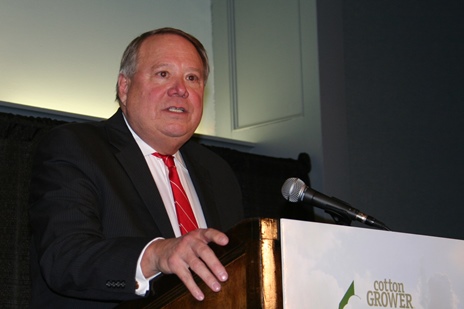
From left, Les Lewis, Mallory Alexander International Logistics; Greg Wakefield, Wakefield Inspection Services; and Brett Anderhub, Rekerdres & Sons Insurance
A Chinese worker moves a cotton bale in one of the Mallory warehouses that is part of the MWR joint effort.
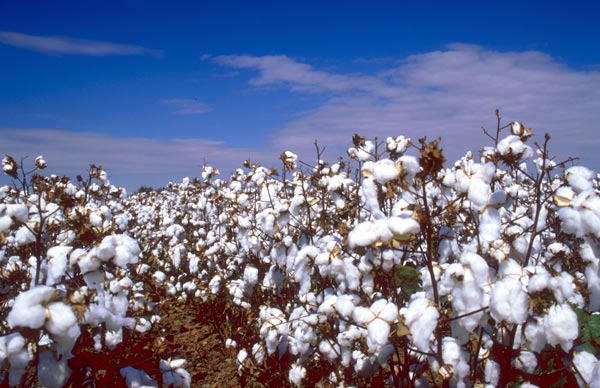
MWR stores U.S. cotton imported into China at Mallory-operated warehouses in six Chinese cities.
GET THE NEWSLETTER TODAY!