



Cotton Jassid Adds New Insect Pressure to Georgia Cotton Producers
The cotton jassid (Amrasca biguttula) — also known as the two-spot cotton leafhopper — was first detected on okra in early July in Seminole County, which perches at Georgia’s far southwestern border abutting Florida and Alabama.
Within weeks, the pest had spread north from Florida and surged across most of Georgia’s cotton-producing counties.
New Pest to Georgia Hinders Cotton Development
The insect feeds by piercing leaves and injecting a toxin that causes tissue to yellow, curl, and die. That damage disrupts photosynthesis, which is essential for cotton boll development.
Cotton continues to hold its place as Georgia’s leading row crop, bringing in a farm gate value topping $938.6 million statewide in 2023. Colquitt County alone contributed more than $46 million, according to the Georgia Ag Impact Report.

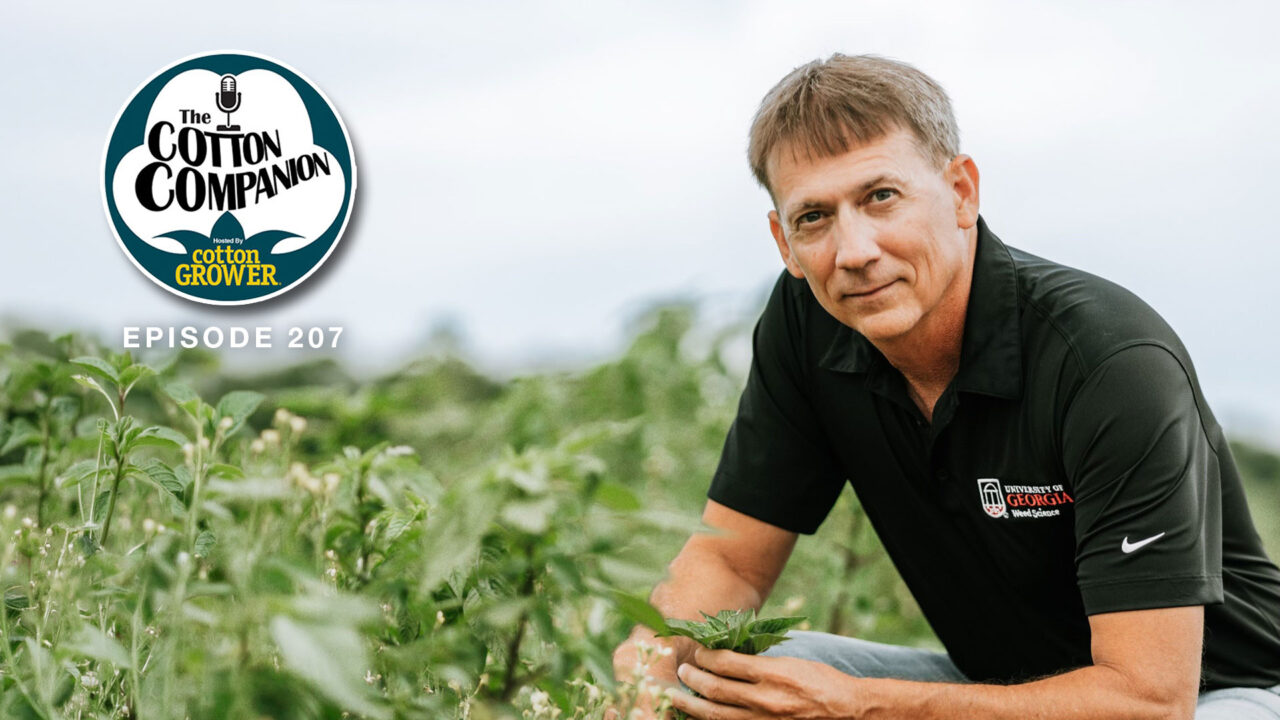



“The arrival of the cotton jassid has taken many growers by surprise and could affect yields in some areas,” says Jeremy Kichler, County Extension Coordinator for University of Georgia Cooperative Extension in Colquitt County, who has a background in cotton agronomy.
Losing leaf area reduces the plant’s ability to make energy, which means less boll fill — when the cotton’s lint and seeds don’t fully develop — and lower fiber quality, he explains.
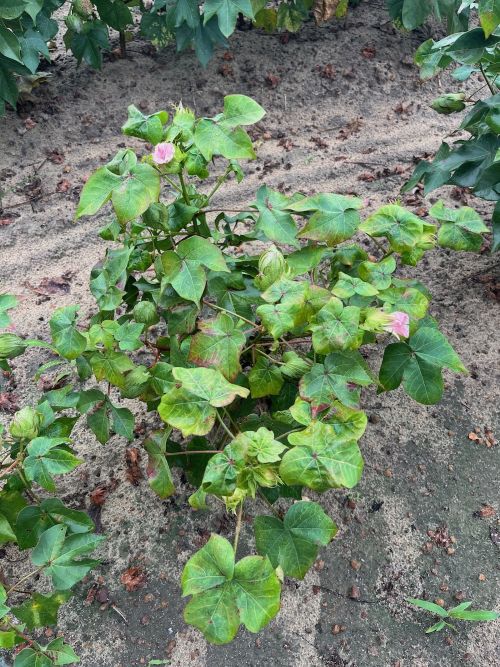
Feeding damage to leaves from jassids impedes proper cotton boll development, which can impact overall yields. (Photo: Jeremy Kichler, Agriculture and Natural Resources agent for UGA Extension, Colquitt County)
Cotton’s Challenging Growing Season
Already operating under tight margins because of low market prices, many farms are still recovering from damage caused by Hurricane Helene last year.
“Cotton growers are already struggling,” Kichler says. “And when you add the cost of extra insecticide applications for managing jassids, the economics get even tougher.”
Researchers believe the pest originated in the Indian subcontinent before spreading to Puerto Rico and likely reaching Florida during a tropical storm or hurricane before moving into south Georgia. Because the jassid is new to the region, little is known about how to best manage it under Georgia’s growing conditions.
Led by Extension entomologist Phillip Roberts, the UGA Cotton Team is working quickly to develop thresholds and insecticide recommendations. On-farm trials are underway across the state, including in Colquitt County, to determine which products provide consistent control and how they fit into existing pest management programs.
“This adds another layer of complexity for our growers,” Kichler says. “We’re already dealing with stink bugs, whiteflies, and plant bugs, so the decisions aren’t always clear about how much to manage it and when the cost of management outweighs the benefit.”
UGA Extension Works to Find Answers
Despite the uncertainty, Kichler says the situation is being closely monitored.
“This is a steadily evolving situation, and we’re learning something new about it every day,” he adds. “But we’re on it and working to find the best solutions for our growers.”
GET THE NEWSLETTER TODAY!