



Cotton 2.0: Farming the Fiber of the Future
 July 21, 2025
 Cotton is recognized as one of the most important natural fibers globally, widely utilized in apparel, home textiles, and numerous industries. The crop’s remarkable attributes — including softness, breathability, durability, and versatility — contribute to its high demand around the world.
However, despite its widespread use, conventional cotton farming has come under scrutiny for its significant environmental effects, leading the agricultural sector to explore innovative and sustainable farming practices.
Modern advancements in agricultural technology are pivotal in transforming traditional practices, helping to make cotton farming more efficient and environmentally sustainable. Among these, adopting high level crop monitoring software for precision farming can help enhance productivity and reduce resource waste, setting a benchmark for sustainable agricultural practices.
Ideal Growing Conditions for Cotton
Cotton is a key agricultural commodity globally, providing essential income and jobs for more than 100 million people globally. In addition to being a raw material for the textile sector, cotton underpins a complex global value chain that fosters economic growth, trade, and social progress around the world.
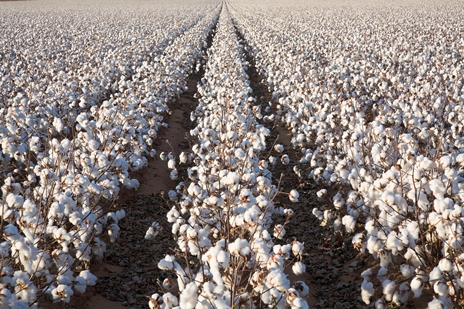

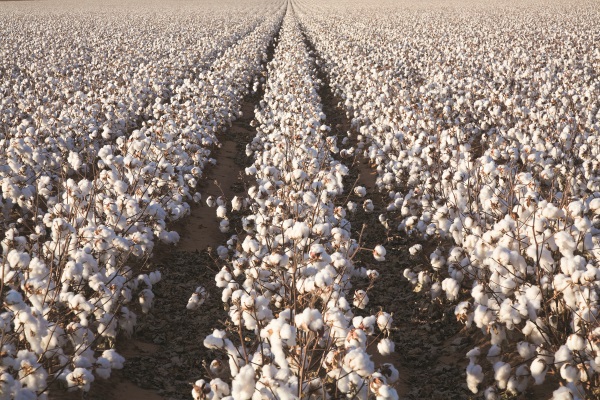

Cotton requires specific environmental and soil conditions to grow optimally. The ideal temperature for cotton cultivation ranges between 64°F to 86°F throughout the growth period. Temperatures below 59°F can slow growth, while prolonged exposure to temperatures exceeding 95°F can stress plants, resulting in reduced fiber quality and yields.
Sunlight is another critical factor; cotton plants require ample sunlight, typically at least 6 to 10 hours daily during their growth stages. Rainfall must be moderate and consistent, ideally ranging from 19-29 inches annually, as excessive rainfall can spoil the crop and disrupt harvesting schedules. Additionally, cotton performs best in well-drained loamy soils with rich organic matter content and pH levels between 6.0 and 7.5. Proper soil preparation, nutrient management, and crop health monitoring are vital to achieving high yields.
Advanced Technologies Shaping Modern Cotton Cultivation
Innovations and technological advancements are dramatically transforming cotton farming, enhancing productivity, sustainability, and profitability. Those key technologies include:
GPS and Precision Agriculture. GPS-guided farming machinery allows farmers to execute precise field operations, drastically reducing the waste of seeds, fertilizers, pesticides, water, and fuel by minimizing overlaps and optimizing planting patterns.
Precision Irrigation and Drip Fertigation. Precision irrigation dramatically enhances resource efficiency and sustainability. A global 2023 review found that drip fertigation in cotton farming can cut fertilizer use by 20–30% and save up to 50–60% in water, all while boosting yields.
Drone and Aerial Monitoring. Drone technology enables real-time monitoring of cotton fields. With aerial imagery and sensor integration, drones swiftly detect areas affected by pests, diseases, and nutrient deficiencies, significantly improving crop health monitoring.
Artificial Intelligence (AI) and Data Analytics. AI-driven predictive models are extensively utilized to forecast cotton yields, optimize irrigation practices, and provide early warnings of pest or disease outbreaks. This precision significantly reduces operational costs and helps enhance resource efficiency.
Blockchain Technology. Blockchain is increasingly adopted to ensure transparency in cotton supply chains, providing verifiable records of sustainable and ethical farming practices. This transparency helps boost consumer confidence, particularly among environmentally conscious buyers.
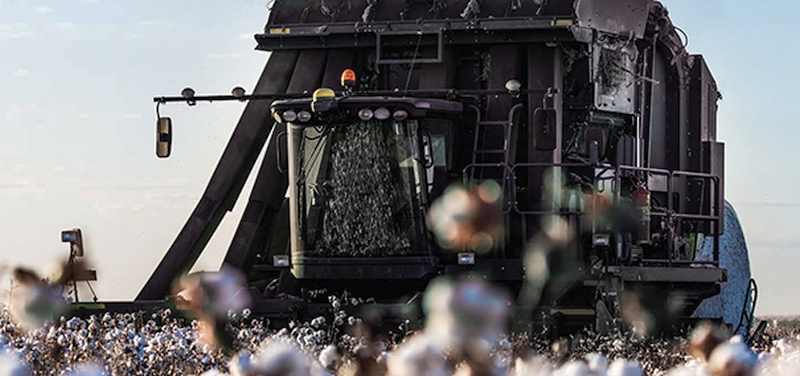
Automated Machinery and Robotics. Automation — including autonomous tractors, robotic harvesters, and advanced satellite crop monitoring platforms — is becoming increasingly prevalent with the promise of helping reduce labor demands, minimize human error, and improve overall efficiency in cotton farming.
Role of EOSDA Crop Monitoring in Cotton Production
EOSDA Crop Monitoring, developed by EOS Data Analytics, is a sophisticated satellite-based crop monitoring software integral to modern cotton farming. It consolidates satellite imagery, weather forecasts, and ground-level observations into a unified platform providing farmers with critical data for enhanced decision-making. The software aids in identifying crop stress, monitoring plant health, and efficiently managing resources via precise remote crop monitoring. Its user-friendly interface is beneficial for farmers, agronomists, and agricultural consultants, ensuring quick and informed decisions to help achieve maximum yields.
Beyond basic monitoring, EOSDA Crop Monitoring offers detailed analytical features such as vegetation indices (e.g., NDVI, NDMI, ReCI, MSAVI), soil moisture analytics, and yield forecasting tools, enabling precise management of irrigation, fertilization, and pest control. The platform’s ability to provide real-time insights significantly enhances operational efficiency and sustainability by enabling timely interventions, ultimately improving profitability and reducing environmental impact.
Additionally, EOSDA facilitates collaboration among stakeholders by providing easy access to data and reports through a cloud-based interface. Users can set alerts for abnormal field conditions, generate detailed weekly reports, and conduct historical trend analysis. These advanced capabilities ensure that cotton producers remain proactive, informed, and responsive to emerging challenges and opportunities.
Environmental Implications of Cotton Production
Contemporary cotton farming practices and technological advances have significantly helped mitigate some of cotton’s environmental challenges. Improved irrigation methods, such as drip and sprinkler systems, drastically cut water consumption. Satellite-based agriculture monitoring systems precisely track water and nutrient requirements, reducing unnecessary chemical usage. Integrated pest management and organic cultivation methods further diminish environmental harm, promoting a sustainable cotton industry.
A 2023–2024 study by the USDA Agricultural Research Service evaluated a gravity drip irrigation system for cotton in arid U.S. regions. Under full evapotranspiration replacement, gravity drip produced 11% higher cotton yield compared to traditional furrow irrigation and improved water-use efficiency under deficit conditions while reducing water usage significantly.
Innovations for a Sustainable Future in Cotton Farming
Anticipating the future, cotton farming is poised for rapid development thanks to ongoing technological progress. Innovations like biotechnology, precision agriculture, and autonomous systems are likely to continue cotton farming’s transformation by helping boost yields, minimize environmental impacts, and improve resilience to climate change.
New technologies in genetic engineering offer the potential for drought-resistant and pest-resistant cotton varieties, greatly decreasing reliance on chemical inputs and irrigation. Automated farming machinery and AI-powered precision tools will further optimize operations, facilitating sustainable and profitable cotton farming.
Adopting the best agricultural monitoring tools remains essential for future cotton cultivation, ensuring economic viability, environmental responsibility, and adaptability to emerging global challenges. Thus, the continued evolution and adoption of technological innovations will solidify cotton’s role as the sustainable fiber of the future, benefiting producers, consumers, and the entire planet.
Information from EOS Data Analytics
GET THE NEWSLETTER TODAY!