



PhytoGen Sets New High Yielding, Top Fiber Quality Varieties for 2026
 December 11, 2025
 PhytoGen cottonseed, the U.S. cottonseed brand of Corteva Agriscience, has announced two new varieties for the 2026 season: PHY 357 W3FE and PHY 433 W3FE.
These broadly adapted Upland varieties are bred to deliver break-through yields and fiber quality for growers across the Cotton Belt from the Southeast to West Texas.
“Yield is the first thing growers need, especially in challenging market conditions, and these varieties offer a step-change in yield potential to help U.S. cotton producers achieve more on their farms,” says Joel Faircloth, Ph.D., Corteva Portfolio Leader – Cotton. “These varieties raise the bar on yield potential and offer broad adaptability for more consistent production across varying agronomic conditions.”
The broad adaptation of PHY 357 W3FE and PHY 433 W3FE allows cotton growers to plant these varieties across diverse soil types and irrigation regimes, simplifying variety selection and in-season management. Broad adaptation also increases yield consistency, helping producers better plan for each season.
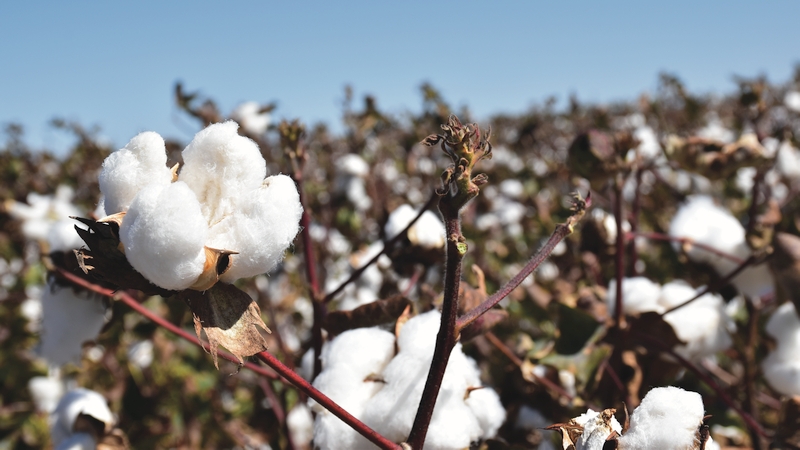
As the market leader in Pima varieties, PhytoGen cottonseed is known for its ability to deliver exceptional fiber quality. These new varieties leverage this expertise in the Upland market with superior fiber quality characteristics, especially staple length. PHY 433 W3FE has produced staple lengths as high as 40 in pre-commercial trials, helping meet the demand for longer staple cotton.



“When we advance new varieties, our first focus is always on yield because that is what growers primarily get paid for,” Faircloth says. “But we also select varieties for superior fiber quality so that growers can get optimal price for their cotton and increase their profit potential. Higher fiber quality also provides more opportunities for our American cotton growers to better compete in the world textile market.”
PHY 357 W3FE is a medium-tall, early-mid-maturing variety, and PHY 433 W3FE is a medium-tall, mid-maturing variety. Both offer a full suite of built-in protection against yield-robbing pests, including resistance to root-knot nematodes, reniform nematodes, and bacterial blight.
Faircloth notes that nematode resistance has become an important native trait for cotton varieties due to rising nematode populations on cotton acres. Resistance to root-knot and reniform nematodes provides peace of mind against these microscopic pests, protecting yield potential against increased populations in much of the Cotton Belt.
“Cotton producers suppressed nematodes for years with aldicarb, and we now have rising numbers of nematodes in cotton,” Faircloth explains. “With built-in nematode resistance, these varieties give producers season-long protection from nematodes and will help reduce soil populations for future seasons. That’s important whether growers plant cotton again or a rotational crop such as soybeans.”
Early OVT Excitement Rooted in Breeding Success
PHY 357 W3FE and PHY 433 W3FE were tested in university Official Variety Trials (OVTs) in 2024 and demonstrated consistent high yields across various regions — winning trials for yield and fiber quality. For example, PHY 357 W3FE won the 2024 Mississippi State University OVTs, outyielding the closest competitor by 54 pounds per acre. In the same trial, PHY 433 W3FE tied for the longest staple length with a 39, or 1.22 inches (in the trials, PHY 357 W3FE and PHY 433 W3FE were entered with their experimental numbers, PX1140F331-04W3FE and PX1150F360-04W3FE, respectively).
“These new varieties were the clear leaders in OVTs last year,” says Faircloth. “You aren’t going to win every trial, but these consistently performed at the top. Growers, consultants, and state cotton specialists who saw these varieties in last year’s OVTs told us they wanted the varieties commercially available as soon as possible.”
Dan Gorman, Ph.D., Corteva Global Cotton Breeding Lead, said excitement for these varieties began several years ago when they first emerged as standouts in the breeding program. Advanced breeding tools and technologies have enabled PhytoGen to assess more germplasm, identify elite varieties and gain earlier insights on performance.
“In recent years, PhytoGen has leveraged the strengths of the Corteva breeding program to speed up the process of bringing varieties to market while giving us more confidence in the products we advance,” Gorman says. “We start with elite germplasm and then utilize genomic techniques and molecular markers for making selections so we don’t have to wait for field visuals.”
PhytoGen also employs winter nurseries to evaluate material, bringing more speed and data to the advancement process.
“PHY 357 W3FE and PHY 433 W3FE are the first varieties to fully benefit from these new breeding methodologies,” Gorman adds. “They’ve been through widespread testing across the Cotton Belt in third-party trials and on growers’ farms, and we’ve seen impressive yield and fiber quality. The breeding team is excited about what these varieties bring to cotton producers.”
For the 2025 season, growers in the PhytoGen Horizon Network (PHN) planted the varieties in on-farm trials to provide on farm, commercial-scale data and feedback to the PhytoGen team ahead of commercial availability in 2026.
To learn more about these varieties, watch this video or visit PhytoGen.com/varieties. To visit a PHN trial in your area, contact your local PhytoGen Field Agronomist.
Information from Corteva Agriscience
GET THE NEWSLETTER TODAY!