



September 2025 Cotton Market Recap: Expert Analysis From Dr. O.A. Cleveland
 October 6, 2025
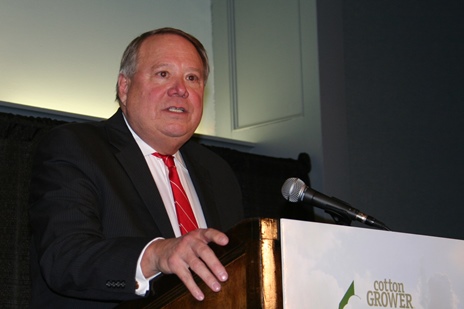
 Dr. O.A. Cleveland, professor emeritus of Agricultural Economics at Mississippi State University, brings more than 50 years of experience in commodities to his role as a trusted voice in the cotton industry. As an advisor, analyst, and consultant to many of the world’s top cotton organizations, his insights have guided growers and traders alike. For over 20 years, Dr. Cleveland has also delivered weekly market commentary to Cotton Grower readers. Now, to help you stay informed at a glance, we’re introducing a monthly recap featuring key takeaways from his weekly columns. Below are highlights from September 2025, with links to the full articles:
September 8: Cotton’s Market Bears Continue to Fend off Bullish Moves
Summary: Cotton saw mixed fundamentals last week, with U.S. weekly export sales rising compared to last year but failing to boost prices, which settled at 66.03 cents for the December contract, down 51 points. Attempts to push above 67 cents faltered as demand disappeared, while light mill buying has prevented prices from falling below 65.50 cents. Despite technical support holding the market in a narrow range, weak demand remains the dominant factor, with global markets from Turkey to India showing little interest. On-call purchases are record-high and bearish, suggesting further price weakness, while the removal of tariffs had little effect. The market faces long-term pressure, with expectations that prices may trend toward 63 cents unless a significant demand turnaround occurs, and the upcoming USDA supply-demand report is anticipated to show increased global and U.S. production and carryover. Read the full commentary from Dr. O.A. Cleveland here.
September 15: Neutral Reports Supports Current Cotton Trading Activity
Summary: Cotton prices rose last week, with December futures up 80 points to 66.83 cents and October settling at 65.19, supported by the USDA’s September world supply-demand report, which was broadly seen as neutral. The report showed slight increases in world production, consumption, and trade, while ending carryover dropped to its lowest since 2021, reinforcing the entrenched 65.50–68 cent trading range. U.S. export sales were low, with key buyers including Vietnam, China, and India, and the record-high on-call purchases suggest mills are holding futures positions longer, keeping downward pressure on prices. While U.S. fundamentals remain bearish, a potential drop in Chinese ending carryover could encourage U.S. cotton purchases, offering a rare bullish upside for the market. Read the full commentary from Dr. O.A. Cleveland here.
September 22: Cotton Market Continue to Hinder Bullish Hints
Summary: Despite world ending stocks being forecast at their lowest since 2010–11 and carryover 50% lower than 2014–15, cotton prices remain stuck in a narrow 65.50–67.50 cent trading range. Recent price gains were short-lived, with midweek declines erasing momentum, while the market’s downward-sloping technical channel suggests a drop to 65 cents in mid-October and potentially 63–64 cents by late fall if no supply disruptions occur in major producing countries. While a smaller crop or a U.S. trade deal could spark a rally toward 68–70 cents, global shifts—such as Brazil’s production nearly tripling since 2010 and China’s consumption dropping 20%—have weakened U.S. export opportunities. Weekly export sales remain low, mills continue to profit despite poor margins, and bearish on-call data indicates growers are pressured to sell. Overall, bearish fundamentals dominate, keeping any bullish potential tentative and dependent on unexpected supply or demand changes. Read the full commentary from Dr. O.A. Cleveland here.
September 27: Cotton Prices Continue to Hang On
Summary: Cotton continues to hold the 66-cent level, though it struggles within a narrowing trading range that has shrunk from 300 points to as little as 50 points on some days. December futures routinely dip below their life-of-contract low but rebound slightly, while the downward-sloping trading channel points to further declines, potentially to mid-to-high 63 cents by early November. Weak export sales and a lack of customer demand keep prices under pressure, with supply factors—particularly harvest expectations in China, India, Brazil, and the U.S.—dominating the price equation. The October contract is effectively expired, setting a target near 63.95 cents for December, which still has roughly 40 trading sessions before first notice day. Despite occasional hope for policy-driven demand from China, bearish on-call sales and the abundance of unpriced global cotton suggest continued downward pressure through 2025–26. Read the full commentary from Dr. O.A. Cleveland here.




GET THE NEWSLETTER TODAY!