



Ramkumar: US-India Trade Relations are Poised for Success
 November 19, 2025
 There will be a win-win trade deal between the world’s largest country with 1.45 billion people (India) and the superpower (USA).
China is a competitor to the United States in advanced technologies, higher education, and defense investments. This situation will always push the United States government to have a cautious approach in dealings with China. With the current tariff levels, exports from China have fallen by 25% since last year, which provides opportunities for other big textile manufacturers and exporters. Leading economies, such as the United States and the EU, will always seek strategic partnerships with countries like India to balance China.
For over two decades now, the United States’ administrations have viewed India as a counterbalance to China in the Pacific and South Asian regions. It is clear from the recent statements by the United States’ President about India being the world’s largest country in terms of its population, the United States would want to engage with India for its global political strategy and exporting advanced products and defense technologies to India.
While the current tariffs for imports from India are still at 50%, as I have opined, the 25% additional tariff for Russian oil imports by India is being used as a negotiating tool by the United States to restrict funds flow to Russia. On November 10, President Donald Trump announced that the tariff on India will be reduced, and a win-win deal will be forthcoming.
I believe the tariff rate for India will be about 15-20%. My estimate is based on the existing global base rate of 10% and other political scenarios. Given that President Trump is a firm believer in tariffs as a way of balancing trade with nations and revamping domestic manufacturing, a zero-tariff regime is highly unlikely. If the deal of 15-20% comes through, India’s tariff rate will be half that of China. China’s rate, which includes the Section 301 tariff, will be 45 percent. India will come out competitive against China and on par with Bangladesh and other textile-exporting nations.
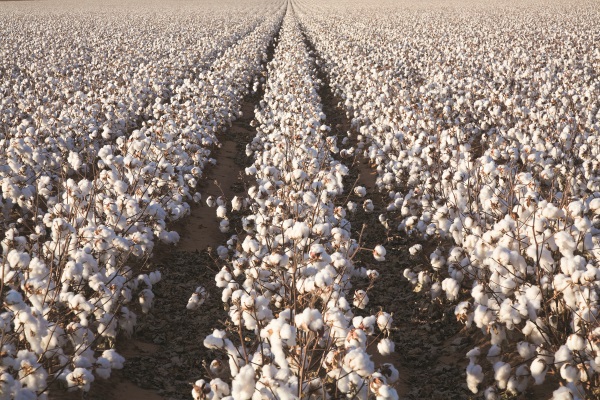

A favorable trade deal with India will be beneficial to the United States’ cotton sector in the medium to long run. India has waived its import duties on cotton till the end of this year. Recent reports have shown that cotton imports to India have risen. India may need a good supply of cotton at competitive rates if it can replace some amount of Chinese export markets. Cotton from West Texas has had a positive reputation in India in terms of less trash, fewer breaks while spinning, and overall quality, based on my interaction with a general manager of a South India-based textile mill, which has over 70,000 ring spindles that spins fine count yarns.
With the trade deal optimistically expected by the end of the year, it is important to enhance engagement between the United States and India, not only at the government level, but also trade bodies and professional associations in the textiles sector have important roles to play to prepare for rebooting and boosting trade. In line with this strategy, two leading professional associations in the field of textiles are engaging on a global platform in India.
India-based world’s largest textile professional association, Textile Association (India), through its South India Unit [TAI-SIU], will be hosting the American Association of Textile Chemists and Colorists (AATCC) this November 21-22, in its annual conference to be held in the textile hub, Coimbatore. With over six hundred industry personnel expected to participate, the event will boost confidence and provide an opportunity to meet with the representatives of a major association from the United States, which has leading brands such as Nike and Under Armour as corporate members.
Gregg Woodcock, Executive Director of AATCC, will be visiting India for the first time, trying to build a solid bridge between the textile sectors of the two nations. Woodcock will be talking about the importance of color fastness and physical properties in textile evaluation, which are vital parameters in export trade. Engagement with AATCC is important for boosting bilateral trade, as AATCC is a leading association focusing on quality aspects and standards.
For the Indian textiles industry to be competitive, in addition to the cost factor, improving its product offerings and quality are valuable.
The collaboration between two major nations in trade and the cooperation between the world’s leading associations in the field of textiles will go a long way in boosting trade and relationships between the two nations.
This Summer, as the Ambassador of AATCC for India, I worked to initiate collaboration in the form of establishing student chapters for AATCC in India. By the time Woodcock arrives in India, four student chapters of AATCC will be in the making in India in institutions located in Bengaluru, Coimbatore, and Chennai.
The Textile Association (India), TAI-SIU event is timely and will be a reboot of the textiles trade and technical relations between India and the United States.
Now that the United States’s longest government shutdown has ended, efforts will go into high gear related to trade and foreign policy engagements, and hence diplomatic and professional interactions between both countries will be strategically helpful.
GET THE NEWSLETTER TODAY!