


Shirley: Thinking About 2026 Acreage
 February 23, 2026
 Attention has already begun to focus somewhat on how much cotton will be planted this year. The price outlook still hinges squarely more on demand, but nevertheless this is the time of year where we begin to think about acreage.
In addition to industry forecasts, there are USDA projections and estimates. The first USDA projection (that we don’t hear much about) is presented annually at the USDA Agricultural Outlook Forum in February. Following that is the first survey-based USDA estimate reported in Prospective Plantings at the end of March. Actual acres planted is first reported by USDA in Acreage at the end of June and revised monthly until the final number in January.
Earlier this month, the National Cotton Council projection for 2026 acreage, based on a January survey of producers, was 8.99 million acres. Last week, the Agricultural Outlook Forum (AOF) projection was 9.4 million acres.
Over the past 5 crop years (2021-2025), the Prospective Plantings estimate (PP) has been lower than the AOF in 3 of 5 years. But on average over the past 5 years, PP and AOF have been less than 1% difference. So, perhaps we can expect next month’s Prospective Plantings number to be similar to the Outlook number.
Actual acres planted have been less than both the AOF and PP projections for 3 of the past 5 years. Actual acres have averaged 4 percent lower than AOF and about the same but less than 1 percent lower than the PP estimate. So, if recent history tells us anything, perhaps actual acres are less than these early projections.
Of course, especially in cotton, what ultimately matters is acreage abandonment (how much of what is planted will not be harvested) and yield. Every year is different.

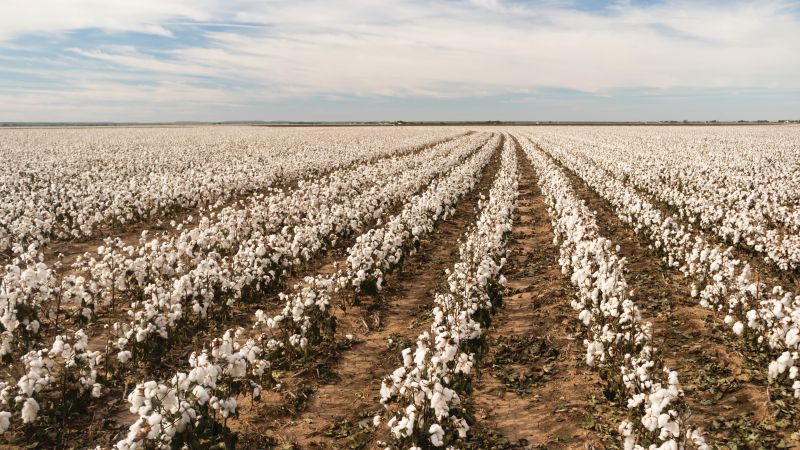


For the present, suppose we average the AOF projection and the NCC estimate. That would be 9.2 million acres planted— only 80,000 acres less, or about the same as last year. If we assume the average abandonment and yield over the past 5 years, that would give us a crop of 12.2 million bales for 2026, 1.7 million bales less than last season.
If acreage, however, is closer to the 9.4 million AOF number (which, on average, is close to what the PP number is), then the 2026 crop could be much closer to or perhaps exceed last year.
There are several unknowns moving forward. Tariffs remain, and are now even more uncertain due to the Supreme Court’s recent ruling. Global demand is uncertain. Projected US exports for the 2025 crop year ending July 31 were lowered by 200,000 bales in last month’s USDA estimates. Recent sales have been good.
The US supply side is obviously uncertain at this point. But it could be less than last year. And if demand/exports improve to do better than this crop year, then things tighten up a bit. The real question and unknown is, does it matter? In a world where we’ve lost production and market share, how much does the US situation factor into price direction?
Prices are in a rebound mode—if they can stay there or better. Prices showing more resiliency around 70 cents would be a good sign for now and the future outlook.
GET THE NEWSLETTER TODAY!