




FIBERMAX® COTTON: BUILT FOR THE TOUGHEST FIELDS
Where Resilience Meets Results.
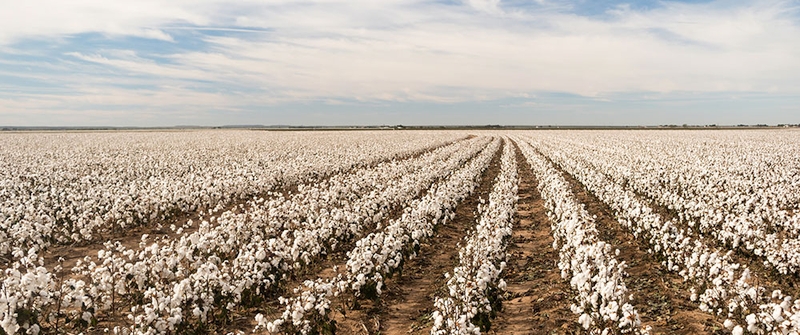
In West Texas, cotton growers face some of the harshest conditions in the country. Windstorms, sandstorms, drought and disease pressure are routine. FiberMax® cotton from BASF isn’t just surviving in these conditions—it’s thriving. That’s no accident. It results from a breeding program deeply rooted in the same soil as the growers it supports.
“We breed and test FiberMax cotton seed right here in West Texas,” says Kenny Melton, Western Region Agronomic Manager at BASF. “Every windstorm, every sandstorm, we see what the grower sees. That’s how we know our varieties can handle it.”
This isn’t theoretical resilience, it’s proven in the field. The agronomic performance trials of FiberMax cotton are conducted on growers’ land, using their equipment and under their management. That real-world testing is what drives advancement decisions. If a variety can’t handle the stress, it doesn’t move forward.
Tackling Verticillium Wilt Head-On
One of the most persistent challenges in the High Plains is Verticillium wilt. It’s not present in every field, but when it hits, it can hit hard. The disease can reduce yield, fiber quality, staple length and micronaire. And it’s not easy to breed against.
“Verticillium wilt tolerance is multigenic,” Melton explains. “It’s not a single trait you can plug in. It takes time and precision.”
FiberMax cotton has a long history of germplasm that brings strong tolerance to Verticillium wilt. BASF has developed varieties that hold up under Verticillium wilt pressure through careful crosses and selection. And the team continues to push forward.
One standout is FiberMax 814AXTP, set for expanded release in 2026. It combines strong Verticillium wilt tolerance with the latest weed control technology. This variety could be a game-changer for growers dealing with a cool, wet late season.
Listening to Growers, Leveraging Data
Breeding decisions for FiberMax cotton aren’t made in a vacuum. Grower feedback and field data are central to the process. The team works closely with the Texas A&M AgriLife Research and Extension Service and other regional extension programs to gather performance insights.
“We don’t just rely on our own data,” Melton says. “We want to know what growers are seeing. We want to know what extension specialists are seeing. We want to see what consultants are seeing. We bring all that together to understand where we’re strong and where we need to improve.”
That feedback loop is critical. Maintaining stress tolerance is non-negotiable as new varieties are developed for higher yield potential and better fiber quality. Whether it’s drought, heat or disease BASF is committed to delivering seed that performs under pressure.
Innovative Opportunities Built on Technology
FiberMax cotton seed has exciting new innovations ahead that will open opportunities for growers with the four-way trait to come.
“We’re committed to coming back stronger than before,” Melton explains. “We’ve got the dicamba* trait as part of the Axant® Flex trait technology that is built-in to FiberMax cotton seed varieties.”
That’s not just a technical upgrade. It’s a strategic move to give growers more flexibility and greater control against resistant weeds. Axant Flex technology also features a new herbicide trait enabling tolerance to a new mode of action for cotton and BASF’s next cotton herbicide innovation, Alite ISO herbicide.*
“This is the first new herbicide mode of action in cotton in over 10 years,” says Adam Hixson, Technical Service Rep at BASF. “Palmer amaranth has developed resistance to so many modes of action and this gives growers a new tool.”
That’s good news for efficacy. The weeds haven’t seen it before, so resistance is low. And it’s not just for Palmer amaranth. Alite ISO herbicide* also controls annual grasses, ragweed and morning glory. “This trait gives growers another option to manage those weeds, once it’s registered for use by the U.S. EPA.” Hixson notes.
What is New: The Axant Flex Weed Control System
If there’s one thing Melton emphasizes to growers, it’s the level of commitment behind every FiberMax cotton seed variety.
Axant Flex technology is available in FiberMax cotton varieties for the 2026 season, and it is designed to give growers more control over resistant weeds. This, BASF’s cotton trait stack, is the most complete with four different herbicide modes of action — glyphosate, glufosinate, dicamba* and Alite ISO* herbicide – for a system that adapts to growers’ needs.
“We’re not just adding traits,” Melton emphasizes. “We’re building better cotton. We’re giving growers more options to manage stress, control weeds and protect yield.”
That commitment shows in the breeding program, the field trials and the partnerships with growers, consultants and extension services. FiberMax cotton seed isn’t chasing trends. It’s solving problems.
What to Do Next
If you’re farming in tough conditions and need cotton seed that’s bred to perform under stress, take a closer look at FiberMax cotton seed. Talk to your local BASF rep about FiberMax cotton varieties with Axant Flex technology. Don’t settle for seed that wasn’t built for your fields.

*Currently, Alite® ISO and Engenia® Herbicides are anticipated to receive registrations for use on cotton containing the Axant® Flex technology for use during the 2026 season, but due to unforeseen delays outside of BASF’s control, the timing of such registrations is uncertain. As of the date of this publication, Alite ISO and Engenia Herbicides are not registered for use on cotton containing the Axant® Flex technology and are not available for sale. BASF is working to obtain these registrations for use in 2026 but cannot guarantee that registrations will occur in time for application. This information is provided for educational purposes only and is not intended to promote the sale of these products. Any sale of these products after registration is obtained shall be based solely on the EPA approved product label, and any claims regarding product safety and efficacy shall be addressed solely by the label. BASF does not guarantee the results of this cottonseed and grower is solely responsible for farming management and agronomic practices and decisions, including, without limitation, selecting seed best suitable for the intended growth and use under grower’s local conditions.
*Additional state restrictions may apply. Crops not containing a gene expressing an HPPD protein will not be tolerant of Alite ISO herbicide.
FiberMax, Alite, Axant, and Engenia are registered trademarks of BASF.
Always read and follow label directions. FiberMax, Alite, Axant and Engenia are registered trademarks of BASF.