




INSIDE THE BREEDING PROCESS THAT POWERS STONEVILLE® COTTON
How the Stoneville Cotton Seed Breeding Pipeline Turns Data Into Dependable Yield Potential.
Developing a cotton seed variety that performs across diverse environments isn’t a matter of luck. It’s the result of years of rigorous breeding, testing and collaboration. At BASF, that process is anything but simple—and that’s exactly why growers trust it.
Breeding That Starts with Purpose
Kenny Melton, Agronomic Manager at BASF, doesn’t sugarcoat the complexity of cotton seed development. “It’s a long process,” he says. “We don’t just turn over a new variety overnight.”
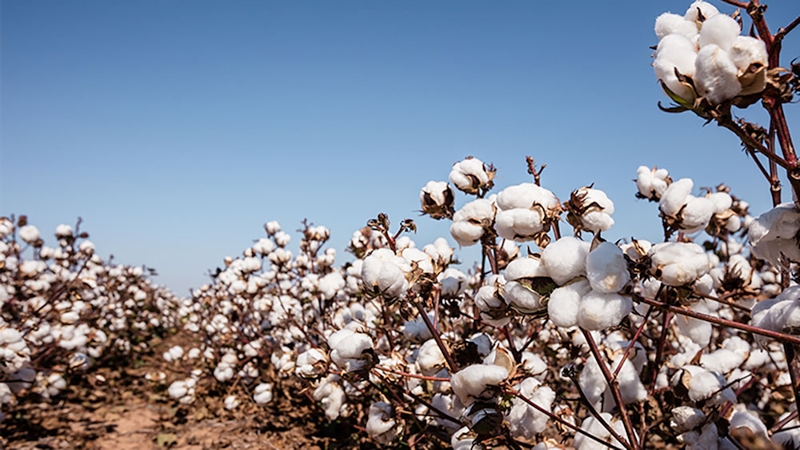
The breeding journey begins with conventional crosses. These are carefully selected for native traits like yield potential, fiber quality and regional adaptability. Once a promising line is identified, transgenic traits, such as herbicide tolerance or pest resistance, are introduced through a process called introgression. From there, breeders make selections and reduce the number of lines further.
 To accelerate the trait development cycle, BASF also incorporates the Forward breeding method, which enables breeders to begin with lines that already have key traits. This accelerates development but reduces genetic diversity. That’s why BASF uses both approaches.
“We can speed it up by doing counter-season production in Costa Rica,” Melton explains. “But even then, it’s time-consuming and costly.”
Each candidate variety is tested across multiple cotton growing regions, under a wide range of environmental conditions. From drought-prone regions to the humid Southeast, BASF evaluates how each line performs under real-world stress.
Eventually, the breeding team narrows the pool to about 10 experimental varieties. These are handed off to agronomic services for field trials.
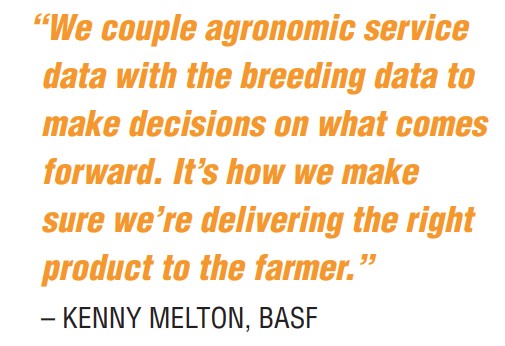
“We couple that data with the breeding data to make decisions on what comes forward,” Melton says. “It’s how we make sure we’re delivering the right product to the farmer.”
Collaboration That Drives Precision
Success of Stoneville cotton seed doesn’t come from breeding alone. It results from close collaboration between breeders, agronomists, field teams and the farmers who grow it. Farmers, their feedback and their businesses, are instrumental to the success of Stoneville cotton seed.
“There’s constant communication between us,” Melton says. “The agronomists work with sales reps, business reps and growers. We funnel that information back to the breeders.”
This feedback loop ensures that the breeding program stays aligned with what growers actually need. It also helps agronomists understand what’s coming down the pipeline, so they can prepare for how and where new varieties will fit.
Why Genetic Diversity Matters
The germplasm pool of Stoneville cotton seed is one of the most diverse in the industry. That’s not just a point of pride; it’s a critical tool for staying ahead of evolving threats.
“If you don’t bring in diversity from outside your mainstream platform, you get stagnant,” Melton notes. “You stop making genetic gains in yield and fiber quality.”
That diversity also allows Stoneville cotton seed to respond to shifting market demands. For example, fiber quality wasn’t always a top priority. Now it’s as essential as yield. The same goes for maturity timing. Some growers need early-season varieties to avoid hurricanes. Others need long-season options to maximize yield.
“It’s like drafting for the NFL,” Melton explains. “If you’re restricted to just one part of the country, you’re not as likely to build a great team. The more you’ve got to choose from, the better.”
Trait Stacking That Solves Real Problems
BASF doesn’t believe in one-size-fits-all solutions. Instead, they build trait packages that address specific regional challenges.
“You may need root-knot nematode tolerance, reniform tolerance, bacterial blight resistance, bronze wilt and Verticillium wilt resistance,” Melton says. “But you’re probably not going to need all of those at once.”
Rather than loading every variety with every trait, Stoneville offers a portfolio that allows growers to choose what best fits their fields. That flexibility is essential when you’re growing cotton across the multiple growing environments in the US Cotton Belt.
“Those are extremes,” Melton emphasizes. “Not one size is going to fit all.”
Helping Growers Make the Right Call
Choosing the right cotton seed variety isn’t just about traits. It’s about understanding the grower’s specific conditions.
“We ask a lot of questions,” Melton says. “Do they need early maturity? Are they worried about hurricanes? Do they have tough ground that needs a vigorous variety? Or is it too growthy and needs something more compact?”
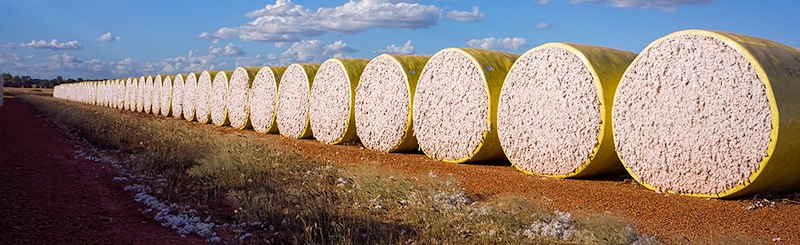
The goal is simple: match the right variety to the right field to get the right yield potential.
What’s New: The Axant® Flex Weed Control System
Axant Flex trait technology is available in Stoneville cotton seed in 2026. It’s designed to give growers more control over resistant weeds, which continue to be one of the biggest threats to yield potential.
“Axant Flex technology provides tolerance to four different herbicide modes of action,” says Adam Hixson, Technical Service Representative. “Glyphosate, glufosinate, dicamba* and now a new HPPD herbicide called Alite® ISO herbicide*, once it is registered for use with cotton.”
What sets Alite ISO herbicide apart is that it’s a residual herbicide. Unlike other traited-enabled herbicides, Alite ISO fights to keep weeds from emerging in the first place, reducing competition for your cotton and working to maximize yield potential.
“Talk to any weed scientist,” Hixson says. “They’ll tell you that the best time to control weeds is before they come up.”
Upon registration, Alite ISO herbicide can be applied from 30 days before planting all the way through the four-leaf stage. That gives growers a much wider application window than most residuals, which are only labeled for pre-emergent use.
“This is something a lot of weeds in cotton country have never seen,” Hixson notes. “It will add a new tool to the arsenal.”
Axant Flex technology is available exclusively in Stoneville and Fibermax® varieties for the 2026 season.
What Growers Should Do Now
If you’re planning for next season, now’s the time to talk to your BASF rep. Ask about:
- Which native traits are most relevant to your fields
- How Axant Flex technology can fit into your weed control program
- What maturity range makes sense for your region
- Which varieties are best suited for your soil and pest pressures
Stoneville cotton isn’t just releasing new varieties. It’s building tools that solve real problems with the precision that only comes from decades of experience, deep collaboration and a relentless focus on performance.

*Currently, Alite®ISO and Engenia® Herbicides are anticipated to receive registrations for use on cotton containing the Axant® Flex technology for use during the 2026 season, but due to unforeseen delays outside of BASF’s control, the timing of such registrations is uncertain. As of the date of this publication, Alite ISO and Engenia Herbicides are not registered for use on cotton containing the Axant® Flex technology and are not available for sale. BASF is working to obtain these registrations for use in 2026 but cannot guarantee that registrations will occur in time for application. This information is provided for educational purposes only and is not intended to promote the sale of these products. Any sale of these products after registration is obtained shall be based solely on the EPA approved product label, and any claims regarding product safety and efficacy shall be addressed solely by the label. BASF does not guarantee the results of this cottonseed and grower is solely responsible for farming management and agronomic practices and decisions, including, without limitation, selecting seed best suitable for the intended growth and use under grower’s local conditions.
Additional state restrictions may apply. Crops not containing a gene expressing an HPPD protein will not be tolerant of Alite ISO herbicide.
Always read and follow label directions. Alite, Axant, Engenia, Fibermax and Stoneville are registered trademarks of BASF.