




WHEN IT COMES TO SEED QUALITY, IT’S ALL ABOUT THE GROWERS
The Stoneville® cotton brand has always been about increasing the economic value of an acre of land
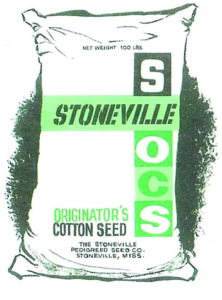 When George B. Walker began the Stoneville® brand 100 years ago, he introduced an uncomplicated business plan with the goal to increase the economic value of an acre of land for growers. Walker’s business plan has not been lost upon Steve Nichols and Don Threet, two cottonseed experts who have contributed notably to the Stoneville brand’s most recent success and who continue to staunchly adhere to the plan’s directive. “We continue to challenge ourselves with that same thinking,” said Nichols, Ph.D., BASF’s South Region Agronomy Lead for cotton. “Because if we’re not meeting that objective, the brand can’t stay strong.”
| “WHEN WE THINK ABOUT WHAT GOES IN A BAG OF STONEVILLE COTTON, WE CERTAINLY LOOK AT PUTTING THE STRONGEST GENETICS WITH THE HIGHEST YIELD POTENTIAL, OUTSTANDING FIBER QUALITY, AND DESIRABLE AGRONOMIC CHARACTERISTICS THAT WE CAN DELIVER.” – STEVE NICHOLS |
A century later, Threet, BASF’s cotton operations manager, remains impressed with Walker’s consideration to put growers first. “Just think about it: [Walker’s business plan] wasn’t about getting rich and having a company that made a lot of money,” said Threet, who has worked on the Stoneville cotton brand for more than 30 years. “It was about creating value for growers and the cotton industry.” Nichols and Threet are doing their parts to ensure Stoneville cotton varieties maintain outstanding value while providing the utmost in quality. Nichols, who has been in his role for four years, previously worked with the Stoneville cotton brand in a similar role for 12 years at Bayer CropScience before Bayer sold the brand to BASF in 2018. Nichols also worked closely with Stoneville cotton varieties while conducting cotton research at the Delta Research & Extension Center, Mississippi State University as an assistant research professor from 1999-2006.

Steve Nichols, Ph.D.
Nichols currently manages a group of BASF agronomists who are technically skilled in weed science, entomology, plant pathology and soil fertility, among other areas. His team works closely with the cotton breeding team and conducts agronomic performance trials of experimental varieties when provided to them from the breeding team. The agronomic team evaluates yield, disease and pest tolerance and the geographic regions where varieties will perform best. “We determine best management practices, such as whether a variety should be placed on a light sandy loam soil, a mixed soil or a heavier textured soil,” Nichols said. “We also look to see if a variety is a good fit for dry land, irrigated land or both.”
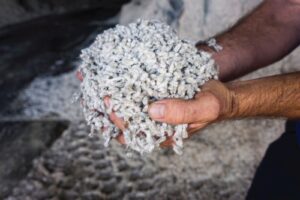
When all the Agronomic Performance Trials and variety testing is complete, Nichols and his team have a robust data set showcasing how a variety can perform across varying soil types and irrigation schemes. “We have a strong understanding of what the genetics are capable of, and from there we match varieties to the production region and fields where they perform best to help ensure growers achieve a return on investment per acre that keeps them profitable. This goes all the way back to the original mission of Stoneville cotton when the company originated 100 years ago.”
| “JUST THINK ABOUT IT: [GEORGE B. WALKER’S BUSINESS PLAN] WASN’T ABOUT GETTING RICH AND HAVING A COMPANY THAT MADE A LOT OF MONEY. IT WAS ABOUT CREATING VALUE FOR GROWERS AND THE COTTON INDUSTRY.” – DON THREET |
QUALITY OVER QUANTITY
 When it comes to quality, Threet has a simple rule that applies to the Stoneville® cotton brand. “Don’t compromise quality for quantity,” he affirmed. Threet and Nichols both know that quality cottonseed equates to improved yield. “The three most important things to a cotton grower are No. 1 to improve yield, No. 2 to improve yield, and No. 3 to improve yield,” Threet said. “Nothing trumps yield.” The breadth of a germplasm pool helps tremendously in improving yield, Threet added, noting that BASF owns the largest cotton germplasm pool in the world. “Genetic yield gain is a result of breeders effectively managing a breeding program.”
 he added. In its early days, the Stoneville cotton brand adopted the marketing mantra “Stand & Deliver,” which focuses on yield. “What we mean by Stand & Deliver is cottonseed coming up out of the ground and establishing a vigorous stand, and then delivering at the end with the yield that the growers are looking for,” Nichols said. “We still look at this closely. When we think about what goes in a bag of Stoneville cotton, we certainly look at putting the strongest genetics with the highest-yielding potential in that bag that we feel like we can deliver.”
A major reason Stoneville cotton has been around for 100 years is grower trust, said Nichols, who chalks that up to the brand’s consistent performance over the years as well as continued strong leadership managing the brand. “Stoneville cotton doesn’t always win every field trial, but the brand always registers a solid and consistent performance,” Nichols said, describing Stoneville’s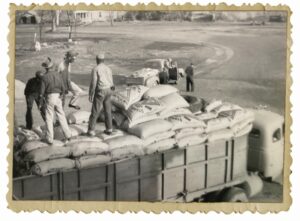 offerings as “tough” varieties that manage stress well. “Stoneville cotton has a history of consistently bringing high-performing varieties to market, whether it’s in new germplasm or new agronomic traits that offer disease and nematode tolerance and improvements in fiber quality.” Nichols believes the Stoneville cotton brand is primed for another 100 years. “I truly believe the brand’s best years are ahead of it,” he said. Threet agrees, noting the brand’s longtime emphasis on its business plan – to increase the economic value of an acre of land for growers – continues to resonate.