
In September, the Better Cotton Initiative (BCI) and longtime Group Manager Quarterway Cotton Growers convened more than 50 participants in Lubbock and Plainview, Texas, for Cotton & Beyond: Regenerative Agriculture on the Texas High Plains. The multi-day event brought the cotton supply chain to the Texas High Plains to see how growers are combining experience, technology, and locally adapted practices to sustain productive operations in a challenging environment.
Participants moved beyond conference room conversations, spending time in pickup trucks, cotton fields, a gin, research laboratories and conservation sites. The format placed growers at the center of the discussion and gave downstream partners a closer look at the decisions, investments, uncertainty, and risks behind each crop.
Regenerative agriculture must be locally grounded
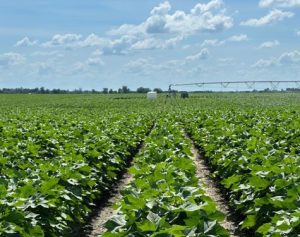
Quarterway growers demonstrated the large-scale equipment and precision technology used across their operations, from planting and input application to harvesting and baling. Just as important, they explained how they evaluate practices through the lens of local conditions, long-term land stewardship and the economic durability of family farming.
The season’s drought made those realities visible. The contrast between irrigated and dryland fields reinforced an important lesson for sustainability programs and sourcing teams: outcomes can vary sharply from year to year, and performance must be understood in the context of rainfall, heat, and other factors outside a producer’s control.
Progress depends on connections beyond the field
At Quarterway’s gin, the group followed the process cotton goes through as it is cleaned, ginned, and packaged. Participants learned about the Permanent Bale Identification (PBI) system and traceability, as well as the many uses for cottonseed and gin byproducts as livestock feed, pharmaceuticals, and currency. The visit connected on-farm production to the infrastructure and market relationships that help create value for U.S. cotton, including Quarterway’s partnership with ECOM, its exclusive merchandising partner.
Plains Cotton Cooperative Association (PCCA), also a BCI Group Manager, added the cooperative perspective. Its team described how farmer-owned marketing and infrastructure connect growers to customers and how traceability and sustainability expectations are influencing the cotton marketplace. Roundtable discussions also underscored that regenerative agriculture is not a single formula: practices must fit the region and the operation while supporting the shared goal of keeping land and farm businesses productive for the next generation.
Water conservation was a consistent theme throughout the event. A visit to Samuel Jackson, LLC highlighted a Lubbock manufacturing facility that has operated for 11 years using captured rainwater rather than municipal or groundwater supplies. Participants also visited an active playa restoration site and heard from regional conservation organizations about the role these shallow wetlands play in groundwater recharge, wildlife habitat and the health of the Southern High Plains. Together, these stops connected farm-level water decisions to the wider landscape and long-term resilience of communities that rely on the Ogallala Aquifer.
Research and data connect farm decisions to fiber value
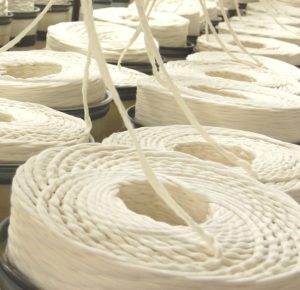
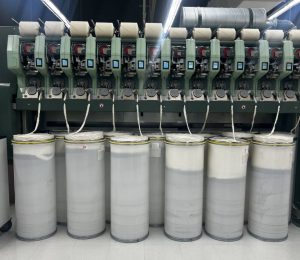
At Texas Tech University’s Fiber & Biopolymer Research Institute, participants toured micro-gin, cotton phenomics and spinning evaluation laboratories. The visit showed how cotton is tested and classified as fiber, yarn, and fabric and how research supports plant breeders, merchants, and textile manufacturers. Organic cotton grower Jeremy Brown also shared the opportunities and operational realities of pursuing an organic-regenerative pathway.
Quarterway producers continually innovate and test new approaches to strengthen their operations. One example is their collaboration with Avalo, Inc., whose work explores how plant evolution and natural diversity can be combined with modern breeding and computational tools to help crops thrive with fewer inputs and adapt to local conditions. Visiting one of Avalo’s research plots on Todd Straley’s farm showed attendees how innovation and nature can work together in the field.
The event’s central takeaway was clear: credible progress depends on regional context, farmer leadership and stronger connections between production, conservation, research and markets. The value of Cotton & Beyond lies not only in what participants saw, but in how those lessons can guide future engagement and investment, give growers a stronger voice, and connect locally grounded action with BCI’s global regenerative agriculture ambitions.
About Cotton & Beyond
Cotton & Beyond: Regenerative Agriculture in the Texas High Plains was held September 8–11, 2026, in Lubbock and Plainview, Texas. The event was co-hosted by the Better Cotton Initiative and Quarterway Cotton Growers, with participation from growers, brands, merchants, cooperatives, researchers, conservation organizations, and ag-tech companies. Cotton & Beyond will return September 14–16, 2027, with an expanded focus on connecting field-level impact to sourcing and exploring how to get the cotton you see in the fields in your supply chain. Register your interest through the Save the Date form here.
Information supplied by the Better Cotton Initiative.


Leave a Reply