

The Oklahoma Department of Agriculture Food and Forestry confirmed in August the presence of the two-spotted cotton leafhopper (also known as the cotton jassid) in two central Oklahoma nurseries. Of note — the jassid has not yet been detected in cotton in the state to this point.
But the discovery of the pest in Oklahoma highlights the cotton jassid’s ability to spread its footprint across the American Sun Belt. In just two summers, the cotton jassid has migrated from the Caribbean into Florida, up through Georgia and the Southeast and westward across the Mid-South and into Oklahoma and Texas.
The Lone Star State did see some jassid infestation in 2025, but the pest has arrived in new locations this season. The cotton jassid has been discovered for the first time in two Brazos Bottom counties — Grimes County and Burleson County, as well as in Willacy County in the Rio Grande Valley. In all three instances, the first sighting of the cotton jassid didn’t occur until August.
“If you have to find it at all, it’s better to find it later in the season,” says Ken Lege, Extension Cotton Specialist with Texas A&M AgriLife. Lege says early research suggests “It will do less damage the later you find it.”
Website Tracks Jassid in Real Time
The addition of Oklahoma brings the total number of states reporting the presence of cotton jassid to 10 as of this production season, according to the collaborative University Extension-powered website Stop2scl.org.
Under the direction of Dr. Zee Ahmed of Clemson University, Stop2scl.org offers real-time tracking of the invasive cotton jassid. Dozens of Extension researchers from across the country are listed as collaborators for the website.
“Ultimately, this website will provide real‑time diagnostics, distribution updates, management guidance, and research‑based tools developed through coordinated efforts among universities, federal agencies, and industry partners,” the site reads.
Scouting and Management Tips
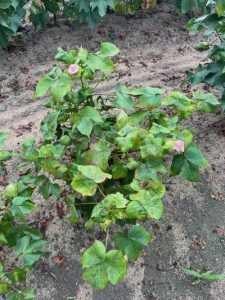
Scouting is essential for every cotton field in 2026, according to Oklahoma State Extension researchers. Producers are encouraged to be on the lookout for the pest through inspection of leaves in the “mid-to-upper canopy.”
“Focus on the 4th mainstem leaf below the terminal, as this is where nymphs typically congregate,” advises an Oklahoma State Extension release authored by Dr. Ashleigh Faris, Maxwell Smith and Dr. Jenny Dudak. “Because adults fly quickly, count the flightless nymphs. Examine at least 25 leaves per field.”
Extension entomologists have held that the threshold for cotton jassid is one insect per leaf. Oklahoma State Extension experts advise producers to continue scouting “up to at least 2 weeks prior to defoliation,” noting that green leaves are needed to fill bolls.
Extension experts have offered some management tips for producers across the Cotton Belt as they look ahead to the 2027 season.
Planting early, they say, has shown to be effective in “outrunning” the peak pressure windows of migratory jassid populations. Experts also advise producers to avoid excessive nitrogen applications, as those tend to attract more attention from the pest. Adequate potassium is crucial, however, as potassium-deficient plants are much more susceptible to damage from the cotton jassid.

Leave a Reply