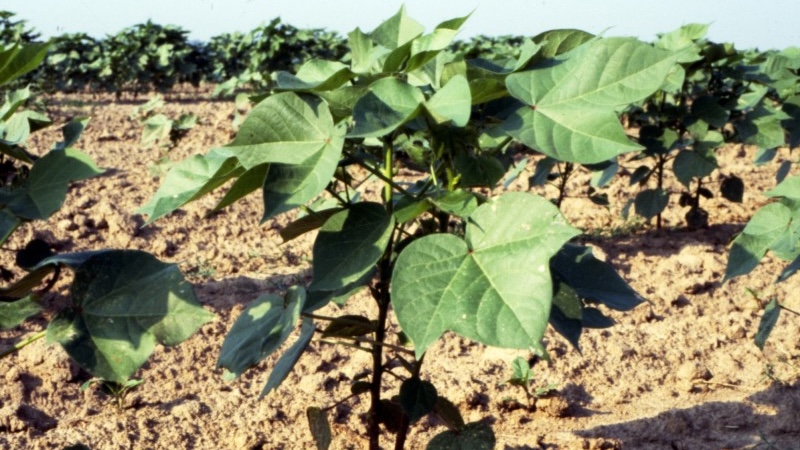
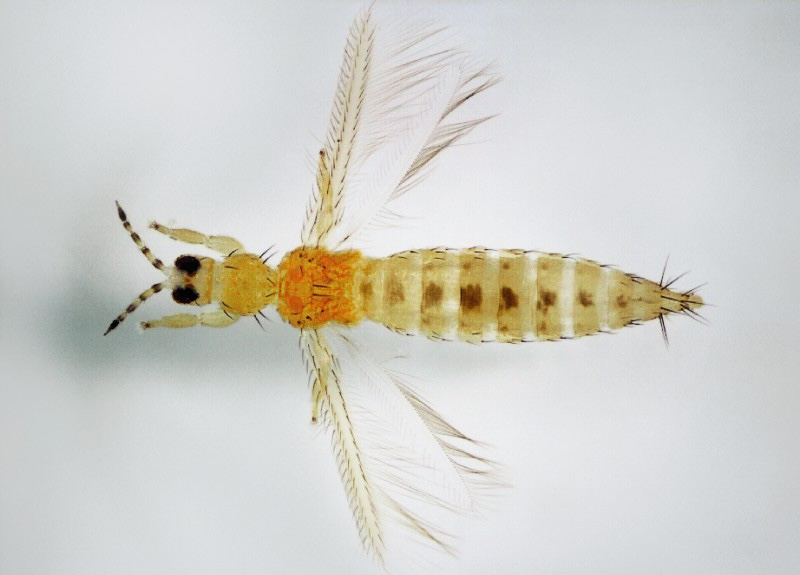
Thrips may be small but left uncontrolled, they can cause substantial foliar damage to early season cotton, reducing plant health, stunting growth and decreasing yield potential.
“Efficacious control options are limited when thrips reach threshold,” said Chase Floyd, assistant professor, crop protection specialist, University of Missouri Extension. “The results from a sample study we conducted on a thrips population where we had bioassays to monitor thrips resistance to the organophosphates acephate and Bidrin insecticide, showed they only reduced populations by 37% and 80%, respectively.”1
If growers choose to use organophosphates, they should be aware of the tendency for these to flare spider mites. Soils with higher sand content allow water to move quickly through the soil profile. This agronomic scenario can lead to dry growing environments, which are more conducive to spider mite infestations.
“If a weather forecast predicts hot and dry conditions, I typically avoid recommending an application of an organophosphate product,” Floyd said. “Humidity can play a role in spider mite suppression, which can be flared by an application of an organophosphate product.”

Timing matters with thrips suppression
Protecting cotton the first 40 days after planting is critical to the plant’s ability to eventually set fruiting positions leading to boll set. Thrips pressure compounded by additional stressors, including cooler weather, can slow plant growth and overall plant health.
“Intrepid Edge insecticide is an industry leading insecticide for thrips control in cotton,” said Hunter Bowman, Ph.D., market development specialist with Corteva Agriscience. “Offering two modes of action, it provides quick control of thrips and other troublesome pests, including beet armyworm, cotton leafworm, and both tobacco and cotton bollworm.”
Post-application scouting
Scouting remains an important job after any insecticide application. Most consultants will give the application anywhere from four to eight days before measuring its effectiveness. An important aspect to remember when addressing thrips is recolonization. If adult thrips are found after an application, it does not mean the application failed.
“Adult thrips can be found on seeding cotton due to constant wind dispersal, which we are familiar with in the Missouri Bootheel,” Floyd said.
Intrepid Edge® insecticide controls some of the toughest pests in a broad range of crops, including cotton, corn and soybeans.
“As corn dries down late in the summer, worm pests move into soybeans and cotton,” Bowman said. “Those pests will feed on sugars in the bolls. That feeding will impact both yield and quality, and that’s why scouting is so important.”
To learn why agronomists and consultants recommend Intrepid Edge insecticide as a first line of defense against lepidopteran pests and thrips, click here.
1University of Missouri Extension. 2024. Recommendations for thrips management in the Missouri Bootheel. https://extension.missouri.edu/news/recommendations-for-thrips-management-in-the-missouri-bootheel