

For generations, farmers have used natural materials such as lime, gypsum, and manure to improve their soil for growing crops. Now, a team of researchers led by the University of Missouri is giving new purpose to an established material — biochar, a charcoal-like substance made from leftover plant waste — and showing how it can address challenges facing today’s cotton growers.
Even though biochar has been used in various forms of agriculture for thousands of years, this study focused on how it could help cotton farmers in the Mississippi Delta region of the United States.
That’s where biochar comes in.
The Mizzou researchers — led by Gurbir Singh, Assistant Professor of Plant Sciences at Mizzou’s College of Agriculture, Food and Natural Resources and MU Extension state specialist — turned to bagasse, a fibrous organic material left over after sugarcane is pressed for its juice. When converted into biochar and added to the soil, the product improved the soil’s ability to hold onto nutrients and moisture, giving cotton plants a better chance to grow strong and healthy.
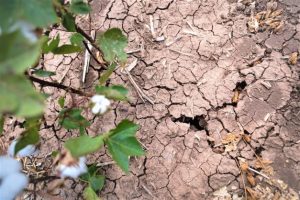
“Cotton is typically grown in sandy and sandy loam soil that struggles with low organic matter, less water-holding capacity, and weaker aggregate stability,” Singh says. “These soils don’t hold water or nutrients well and require more irrigation, which makes it harder to manage cotton production. Biochar offers a solution to these specific challenges.”
Researchers also found one unexpected benefit of using biochar: it can help improve water quality by keeping nitrate-nitrogen — a common fertilizer ingredient — from seeping into groundwater. Nitrates can pose risks to human and environmental health.
“Biochar can hold on to nitrates longer, which keeps them in the soil and out of the water supply,” Singh says.
Looking ahead, Singh and colleagues plan to move beyond small-scale test plots and apply their findings on working farms. The next step is to partner with farmers who have access to biochar to see the results translate in real-world growing conditions.
Singh also hopes to apply what they’ve learned to other crops such as corn and soybeans. While the type of biochar and the amount used will vary with the other crops, he wants to see if the team’s basic approach could offer similar benefits.
“Biochar Impact on Soil Properties and Soil Solution Nutrient Concentrations Under Cotton Production” was published in the Journal of Environmental Management.
Co-authors are Gurpreet Kaur and Kelly Nelson at Mizzou; Ramandeep Kumar Sharma at Rutgers University; Amrinder Jakhar at the University of Georgia; Jagmandeep Dhillon at Mississippi State University; and Saseendran Anapalli at the United States Department of Agriculture’s Agricultural Research Service (USDA ARS). Singh, Jakhar, and Kaur also have joint affiliations at Mississippi State University.
This study was conducted at the Mississippi State University Delta Research and Extension Center in collaboration with the USDA ARS Crop Production System Research Unit in Stoneville, MS.


Leave a Reply