



Cotton Prices Rally as Texas Growing Conditions Turn Mixed
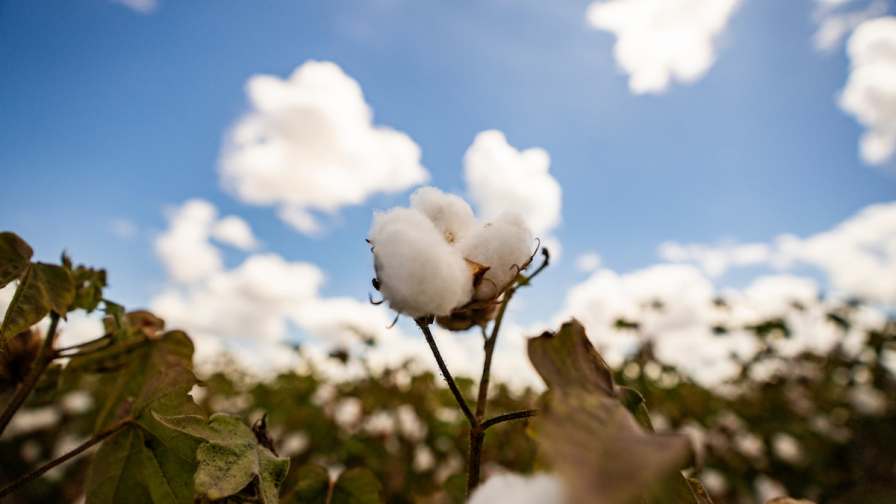
Texas A&M AgriLife Extension Service experts say cotton prices have rallied, but growing conditions remain mixed across the state’s major production regions. Photo credit: Sam Craft/Texas A&M AgriLife
After two years of low prices, cotton prices rallied — though Texas growers’ fortunes still depend heavily on where they farm, said a Texas A&M AgriLife Extension Service expert.
John Robinson, Ph.D., an AgriLife Extension economist-cotton and professor in the Texas A&M Department of Agricultural Economics, said conditions form “a definitely mixed bag” depending on location.
He said conditions for cotton across the state match a Drought Monitor map that shows distinct lines between dry, moderate-drought and drought-free areas.
Growing conditions split by region
Texas’ cotton acreage is concentrated in the northwest regions of the state in the AgriLife Extension districts of the Panhandle, South Plains, Rolling Plains and West Central, with the rest spread across the Interstate-35 corridor, Gulf Coast and Rio Grande Valley, Robinson said.


The Rolling Plains, West Central Texas, the I-35 corridor, the Gulf Coast and the Rio Grande Valley have seen increased rain and cotton fields have steadily improved, Robinson said. Cotton in South Texas is nearing harvest, and producers now need dry weather to avoid delays.
The upper Panhandle has stayed hot and dry most of the season and has likely lost significant dryland acreage, while the South Plains, home to most of the state’s cotton, has seen only patchy rain along with extreme heat.
“It just sort of depends on where you are,” Robinson said.
A June 30 U.S. Department of Agriculture report projected Texas cotton acreage at 5.4 million acres, slightly above last year, Robinson said.
He said cotton often performs better than corn or sorghum under drier conditions.
Prices rally on fund short covering
Prices broke out of an unusually flat, low range in May, jumping from about 65 cents per pound to above 80 cents per pound and briefly touching 88 cents per pound before settling into the upper 70 to lower 80 cents per pound range, where they sit now.
In a report for Southern Ag Today, Robinson said much of the rally came down to large investment funds buying back cotton contracts they’d bet against for two years. Those funds had been betting prices would keep falling — a bet known as a “short” position — but as prices held firm, they started buying back into the market to close out those bets, which pushed prices even higher.
Government data from the Commodity Futures Trading Commission, CFTC, confirms the shift: in April, these funds flipped from betting against cotton to betting on prices to rise, right around the same time prices jumped roughly 20 cents per pound. Robinson said growing concern about supply, driven by the dry start to the season, added even more fuel to the rally.
Disrupted fertilizer exports due to conflicts in the Middle East have also raised input costs, though this year’s prices leave growers better off than the previous two seasons, Robinson said.
Outlook favors some seasonal softening
Robinson expects some seasonal price softening as harvest approaches, based on a 20-year average pattern that sees prices typically ease from mid-July into harvest as uncertainty leaves the market and harvest data confirms actual supply. Harvest begins in South Texas soon and will move north through fall. Barring a major shift in supply and demand, he expects that pattern to hold.
An El Niño pattern has driven this year’s wetter-than-normal conditions over much of the state and should strengthen further into fall and winter, Robinson said.
Cotton fields in the Rolling Plains and High Plains could still use rain, but producers along the Gulf Coast need hot, dry weather to finish harvest. How much cotton Texas ultimately harvests will depend on how that wet pattern unfolds, Robinson added.
AgriLife Extension district reporters compiled the following summaries:
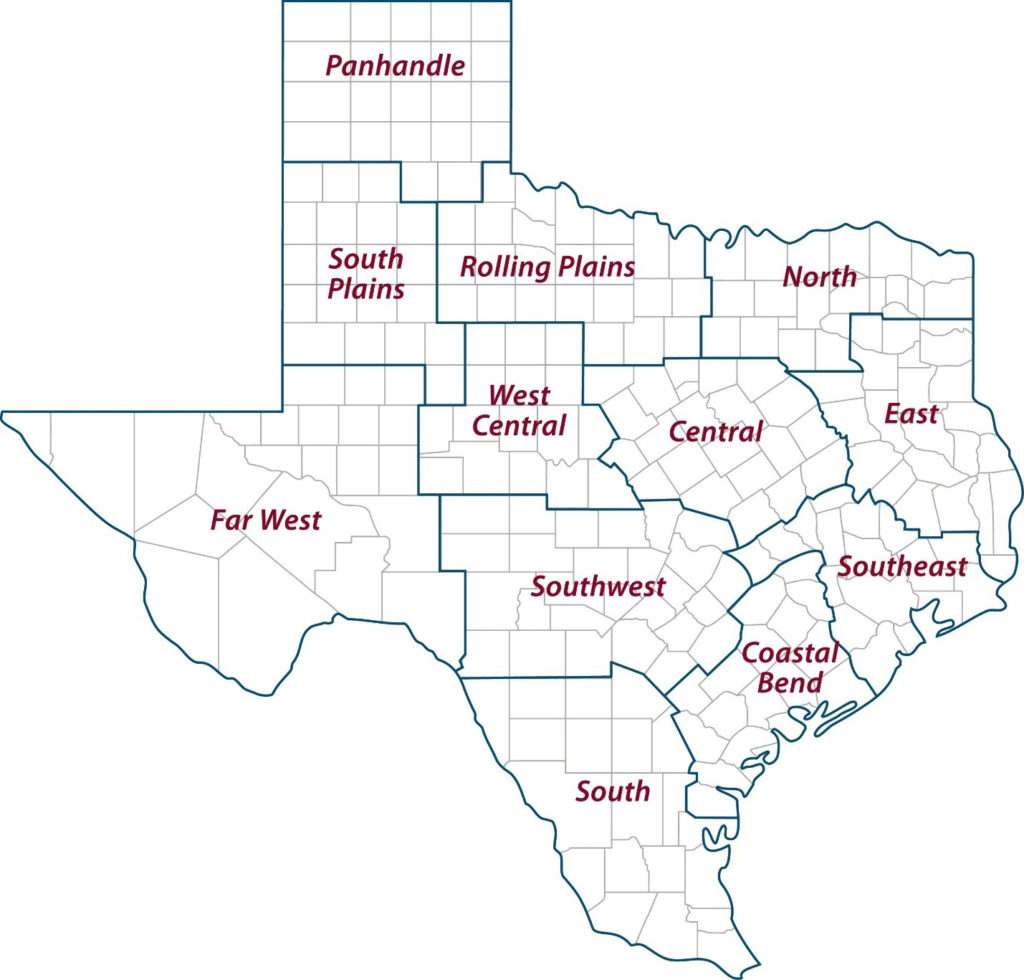
A map of the 12 Texas A&M AgriLife Extension districts.
Panhandle
Rainfall was spotty across the district, with some areas receiving isolated showers while others remained dry through the week. Topsoil and subsoil moisture ranged from very short to adequate. Daytime highs reached the mid-90s, and heat unit accumulation for cotton continued at a maximum pace. Many cotton fields reached the first flower stage, signaling an increased plant water demand critical for boll development. Corn was silking and tasseling on earlier-planted fields, and a few sorghum fields were starting to produce heads. Dryland grain sorghum struggled to survive in the driest areas and extended dry soil conditions combined with elevated afternoon temperatures exacerbated disease pressure. Bacterial late season decline and interveinal chlorosis were noted in random fields. Pasture and rangeland were in very poor to good condition.
South Plains
Rainfall was highly variable across the district, with some areas receiving up to 3 inches and others none. One area reported totals of 3.75-11 inches that gave cotton and sorghum fields a significant boost. Rains also filled stock tanks in parts of the district. Cooler temperatures earlier in the week offered temporary relief, but forecasts called for a return of triple-digit heat. Subsoil moisture reserves continued to decline in areas that missed the heavier showers, and irrigation was expected to run nonstop through the coming heatwave. Early planted corn was in the dent stage while later corn was tasseling, and cotton was blooming or approaching first bloom. Several thousand acres of cotton were reported lost to hail and poor germination. Potato harvest was roughly 40% complete, and cucumber planting had about two weeks remaining. Livestock conditions were fair to good, and pasture and rangeland ranged from very poor to good.
Rolling Plains
Rainfall was scattered, with some counties receiving several inches while others recorded only trace amounts. Topsoil moisture ranged from very short to surplus. A break from extreme heat helped pasture and cotton conditions in the areas that caught moisture. Native pastures greened up with new growth and stock tanks filled. Drier portions of the district continued to suffer, with haygrazer burning up and pastures turning brown. Wheat harvest was complete, with yields averaging 48-70 bushels depending on location, and better yields were reported where more rain fell earlier in the season. Sorghum was colored and nearly ready for harvest pending a drop in grain moisture. Cattle looked exceptional in the wetter portions of the district thanks to good pasture and wheat grazing, and producers expected two more Bermuda grass cuttings. Hay was largely made, though prices were among the lowest in a long time. Overall, pasture and rangeland were in very poor to good condition.
North
Rainfall was scattered across the district, with some areas receiving nearly 3 inches while others were skipped entirely. High temperatures increased stress on both plants and animals. Corn was in good to excellent condition and entering the dent stage in many fields. Soybeans and sorghum continued to grow well. Hay harvest was in full swing, with strong yields but declining quality due to advancing maturity. Grape harvest continued, and figs and peppers remained in production while tomatoes, cucumbers and squash were winding down summer production. Most hydroponic production slowed due to the heat. Pasture and rangeland conditions ranged from poor to excellent, and livestock were in fair to excellent condition. Stock tanks were nearly full in many areas.
East
Scattered to heavy rainfall moved across the district, with totals ranging from trace amounts up to 5 inches. Topsoil and subsoil moisture ranged from short to surplus. A tropical storm was expected to arrive later in the week. Highs ranged from the 80s-90s, with lows in the 65-70-degree range. Hay production continued with generally good yields, though some fields remained too wet to cut. Armyworm and Bermuda stem maggot infestations were reported in pastures and hay meadows, and pasture mealybug pressure was closing in on more counties. Feral hog and gopher damage increased in some areas. Livestock markets remained strong overall, though sale barn prices softened slightly at one auction, with feeder calf prices firm to $5 lower per hundredweight. Fertilizer prices continued to concern many producers. Pasture and rangeland were in poor to excellent condition.
Far West
Widespread rainfall moved across much of the district, with the Big Bend, Pecos and Trans-Pecos areas receiving significant precipitation and localized flooding in some counties. One county reported 5 inches on one day and 14 inches three days later, which caused flooding that damaged roads. Cooler temperatures accompanied the rain in the higher elevations, with upper-elevation highs holding in the upper 70s, while other portions of the district saw highs from the upper 90s to low 100s. In the El Paso area, Pima cotton stands looked strong, alfalfa was producing an average to above-average season with six to seven cuts expected. Rain chances kept alfalfa and Sudan grass producers from cutting. Pecan orchards continued to thrive. Melon harvest continued in some areas. New World screwworm cases increased in one county, and livestock health remained a focus for producers across the district. Pasture and rangeland conditions ranged from very poor to good, and livestock were in poor to good condition.
West Central
Widespread soaking rains fell across much of the district, with totals from 1 inch up to 5-15 inches in one county where flooding occurred. Stock tanks filled, and cooler temperatures accompanied the moisture through much of the week. Pastures greened up quickly and coastal Bermuda grass producers looked toward a second cutting in the coming weeks. Hay harvest was largely stalled in the wettest areas. Cotton progressed well following the rains, though some fields flooded out in the heaviest rainfall zones. Sorghum was headed and coloring, and the pecan crop looked good heading into the kernel-filling stage. Cattle receipts at one sale in the Hill Country declined due to the good rains, with prices for feeder steers $15-$17 lower per hundredweight, and prices for packer cows and bulls steady. Livestock and pasture and rangeland conditions ranged from poor to excellent across the district.
Central
Rainfall was scattered, with totals from zero in some areas to 6-7 inches in others. Extreme heat was forecast for the coming week. Corn was maturing rapidly and harvest was set to begin as soon as fields dried, with some limited harvesting already underway. Sorghum was mature, and harvest should follow behind corn. Cotton was squaring, blooming and setting bolls, and the summer rains benefited fields that had looked stressed just a week earlier. Producers baled hay between rain events. Pasture mealybug infestations remained a major problem in hay fields and pastures, and the pest was now showing up in urban lawns. Fire danger persisted in drier areas. Livestock conditions ranged from poor to excellent, cattle markets remained strong, and sheep and goat markets were steady with good demand.
Southwest
Heavy rainfall occurred, with several counties reporting 10 inches to more than 25 inches in a 72-hour period. Severe flooding damaged homes, fences, power lines and roads, and produced significant losses of livestock and cropland in some counties. The Pedernales, Frio and Nueces rivers rose sharply, and creeks that had been dry for multiple years ran again. Wildlife responded well to the moisture, with older whitetail fawns appearing weaned and venturing away from does. Gardens suffered, with reports of fungal disease and split tomatoes due to heavy moisture levels. Corn neared maturity, and sorghum was close to harvest. First cuttings of hay were baled where fields allowed. Pasture mealybug damage remained widespread in pastures across the district. Some producers continued supplemental feeding of livestock, and pasture and rangeland conditions ranged from poor to good.
Southeast
Heavy rainfall fell across much of the district, with localized flooding and saturated soils in several counties. A tropical storm was expected later in the week. Hay harvest remained stalled in most areas. Rice was heading on 75%-90% of acres and was in good condition. Only a small percentage of rice had been cut before rain shut operations down. Corn was curing and drying, so standing water was not expected to cause major damage, though some cotton fields could see issues. Forage growth remained strong, though rapid maturity brought declining quality and some corresponding decline in livestock condition. Pasture mealybug was confirmed in the north part of one county. Pasture, rangeland and livestock conditions were fair to excellent.
Coastal Bend
Heavy rainfall of 6-10 inches fell across the district, halting harvesting operations that had been running full speed. Grain sorghum and corn harvest were underway on early-planted fields, with mixed yields. Grain sorghum yields were lower this year due to dry early-season conditions followed by excessive late-season moisture. Corn grain moisture was still running high before the rain arrived. Rice harvest was off to a slow start before the rainfall. Cotton looked good, and initial defoliation had begun on some acres, with harvest expected to start in the following weeks. Pasture mealybug continued to cause damage in forage crops, with more producers recognizing the infestations. Standing water remained in pastures and farmland in several areas. Livestock, pastures and rangelands were in fair to excellent condition.
South
Conditions were hot, humid and dry across much of the district, with temperatures reaching 100 degrees or more on several consecutive days. Saharan dust provided some cloud cover. Rainfall was highly variable with one county receiving more than 5-6 inches over three days while much of the district stayed dry. Widespread flooding from adjacent districts affected the district as well, with the Nueces River rising to approximately 37 feet in one county and producing devastating losses of crops, livestock, fences, equipment, roads and agricultural infrastructure. Corn was near harvest and grain sorghum harvest was in full swing on earlier plantings, with very late-planted sorghum still not headed. Sunflower harvest got underway, and sesame was being planted. Cotton was progressing under irrigation with defoliation started on some fields. Hay producers put up plenty of hay where conditions allowed. A New World screwworm case was confirmed in one county. Cattle prices declined a few dollars per hundredweight at one sale barn. Pasture and rangeland conditions ranged from poor to good, and livestock were in fair to excellent condition. Quail chicks and white-tailed deer fawns were spotted, and wildlife appeared in good condition.
GET THE NEWSLETTER TODAY!