


Spotlighting the ‘Best in Cotton’ Class of 2026
 August 3, 2026
 Over the past year, we’ve seen the American cotton industry beset by trials on every front. Luckily for the 125,000 people who owe their job to this crop, we have stakeholders who meet and exceed every challenge.
Whenever a challenge arises in our industry, like clockwork, we see a response from those best positioned to meet it.
As a new insect pest invades the South, researchers there respond with rapid speed. Networks mobilize to share information. Ultimately, all our farmers benefit from this coordinated effort.
Similarly, as prices suffer and the farm economy becomes challenged, we see a cotton response on multiple fronts. Those in the political sphere spring into action with new thinking and new policy aimed at bolstering demand. Cotton’s association leaders enlist brands to promote our product over all competitors. And research scientists double their efforts in the lab to produce germplasm that bolsters yield — and revenue for our producers.
It’s sobering to think where our industry would be without these cotton industry first responders — those who answer the call wherever it may come from. That’s why Cotton Grower is shining a spotlight on those who protect our industry with the 2026 Best in Cotton program, designed to recognize and elevate those who have made a significant impact in protecting our industry over the past year.
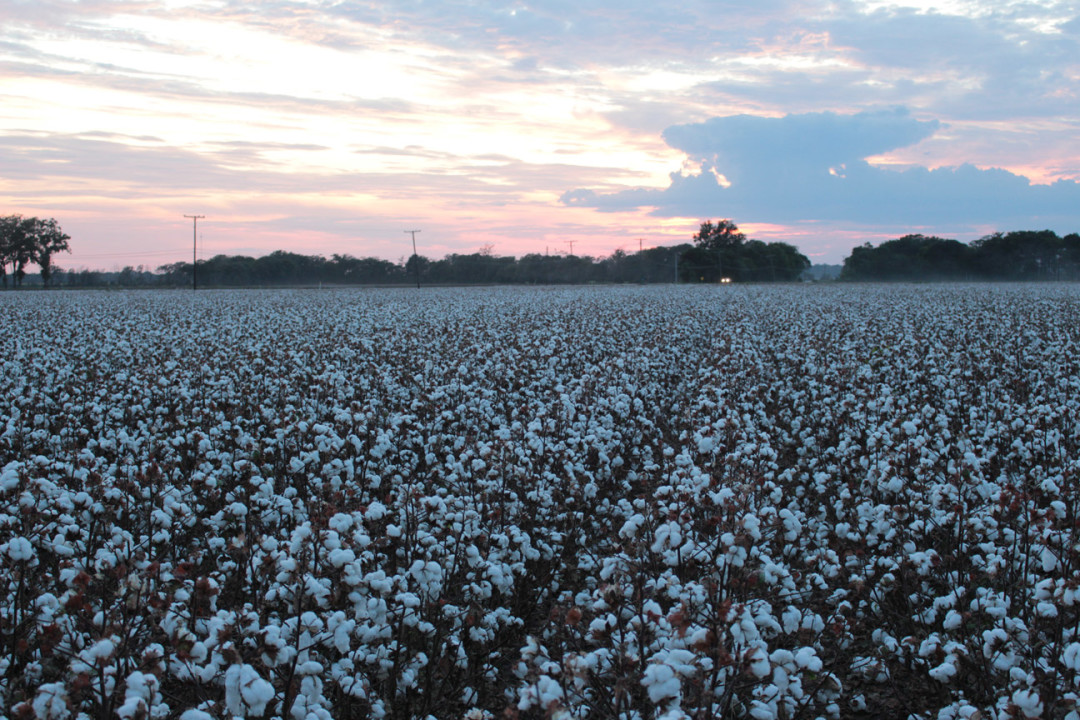
This annual program should be viewed as a celebration of the best people in our industry, and as a tool to elevate their efforts which serve to benefit us all. Over the next two pages you’ll find brief stories about cotton industry stakeholders who, in their own quiet ways, have kept the cotton industry afloat. We salute them, and look forward to recognizing more of the Best in Cotton for many years to come!
Best in Extension
Phillip Roberts, University of Georgia
Scott Graham, Auburn University
Isaac Esqivel, University of Florida
When the two-spotted cotton leafhopper, also known as the cotton jassid, arrived in Georgia fields in July of 2025, no one in the state had ever seen it before. By the end of that production season, it had spread across the Southeast, wreaking havoc in fields that went unchecked and untreated.
Thankfully, most cotton producers were fully prepared due to the diligent work of a network of Extension entomologists who coordinated their efforts – research plots, data analysis and population tracking — all on the fly. At the center of this flurry of activity stood Phillip Roberts, Scott Graham and Isaac Esqivel.
Their expertise in entomology, and their leadership in coordinating efforts across the Southeast served to shield the Cotton Belt from this economically disruptive insect pest. American producers entered the 2026 crop season with ample tools to combat the cotton jassid thanks largely to the excellent work displayed by these three Extension researchers.
Best in Cotton Policy
Bryce McWilliams
Senatorial staff, Cindy Hyde-Smith
Bryce McWilliams has emerged as one of the most effective and influential young policy professionals in Washington. Serving on the staff of Senator Cindy Hyde-Smith (R-MS), Bryce has demonstrated exceptional leadership, initiative, and commitment in advancing policies that strengthen the competitiveness and long-term viability of the U.S. cotton industry.
Most notably, Bryce has been a driving force behind the Buying American Cotton Act, the cotton industry’s flagship legislative priority. Since Senator Hyde-Smith introduced the legislation, Bryce has worked tirelessly to advance this bill. His efforts have helped transform the legislation from a concept into a serious policy initiative with broad bipartisan and bicameral momentum.
As Buddy Allen, President and CEO of the American Cotton Shippers Association, notes: “You see the best Congressional staff rise and distinguish themselves by taking initiative and responsibility, seizing opportunities to deliver outcomes for their constituents and the industries that support them. We are watching this in real time as Bryce drives this legislation. Through diligence, strategic thinking, and a deep understanding of agricultural policy, he has become a trusted advocate for the U.S. cotton industry and the broader agricultural community.”
Best in Conservation
Sledge Taylor, Producer
Como, MS
Mississippi cotton producer Sledge Taylor has been involved with conservation practices for so long that much of the language around the topic has changed significantly between the time he first began farming and the present day.
“I planted some cover crops and did some no-till work back in the 80s,” Taylor says. “Back then it was about best conservation practices mainly to stop erosion.”
Today, the conversation has shifted the focus to preserving soil health, and farming sustainably to preserve the land for future generations. Taylor is still onboard, and still setting an example for others to follow, while advocating for more support of conservation efforts.
Taylor says he utilizes the value of cover crops on 50 percent of his acreage, while practicing no-till on all of his cotton and corn production.
In 2026 he’s partnered with local organizations Delta F.A.R.M. and Delta Wildlife, as well as Syngenta, to provide a Pollinator and Wildflower Habitat on his farm — – yet another effort aimed at preserving the local ecological habitat in north Mississippi.
Best in Promotion
1888 Mills
Perhaps no retail brand has embraced cotton as enthusiastically as 1888 Mills did in the fall of 2025. Working in conjunction with Cotton Incorporated, this globally recognized leader in linen manufacturing debuted a line of bedding, sheets and towels comprised of 100 percent cotton.
The entire line of products features the Seal of Cotton trademark – a sign of the pride the brand has taken in offering natural fibers to a consumer market that is increasingly focused on sustainability, and the health benefits cotton offers over its manmade competition.
“1888 Mills champions cotton and consistently proves that natural fiber innovation meets real market needs,” said Marcy Gang, executive account manager at Cotton Incorporated. “This collection shows cotton delivers cost efficiency and gives consumers the comfort and performance they want at prices that rival low-cost synthetics.”
Best in Research
Charlie Cook
Nutrien Dyna-Gro
If necessity is the mother of invention, then a strained farm economy is at least partially responsible for the remarkable results Dr. Charlie Cook has developed through his Nutrien Dyna-Gro cotton breeding efforts.
Cook is the captain of the Dyna-Gro cotton seed program and has toiled for years to develop varieties that are tough enough to meet the challenging moment for producers across the Cotton Belt. Those efforts are paying off for a community of producers on the Texas High Plains who found the value in Dyna-Gro P224 B3XF, a short season Upland cotton variety with staple lengths more akin to a Pima or Acala.
“Currently DynaGro has no competition in the staple arena,” says Texas producer Carroll Leon. “There is no other Upland cotton that competes.”
Cook toiled for years to nurture a line of germplasm that maximized staple. His dedication to the project paid dividends for producers.
“He kept at it when most in the industry would’ve said ‘Throw it out,’” says Dr. Chad Brewer, vice president of technical services for the National Cotton Council of America.
Best in Ag Technology
Rob Fleming, Producer
Halifax County, North Carolina
Rob Fleming farms cotton, soybeans, and peanuts in Halifax County, North Carolina, and has emerged as one of the most forward-thinking technology adopters in the state.
When his brother and farming partner recently took a position off the farm, Rob took on the entire operation himself and turned to artificial intelligence to help fill the gap — applying it to everything from designing new equipment to interpreting crop variety trial results.
He is currently developing a system that draws on university variety trial data from multiple locations and matches the weather and soil conditions of each trial to the fields he is considering, helping him select the best-suited variety for each one.
Rob pairs these innovations with the latest precision tools, including variable-rate fertility and precision planting, and follows recommended soil health practices such as minimal tillage and cover crops. He also serves on Cotton Incorporated’s Board of Directors, which helps keep him informed of the latest agricultural technology.
GET THE NEWSLETTER TODAY!