

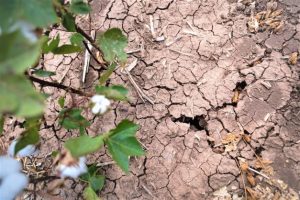
For many cotton producers in west Tennessee, May 2025 was a disaster. The cold and wet conditions devastated planting efforts. Low-lying areas — especially those on no-till ground — often failed to make a stand at all. Many were forced to replant across large swaths.
Some producers may feel the impulse to increase seeding rates as a type of insurance policy to guard against such emergence failures. But University of Tennessee Extension Cotton Specialist Tyson Raper says producers should think twice before increasing seed rates in 2026.
“The trouble is, if a stand is going to fail in Tennessee, it often is going to fail whether you plant 100,000 seeds to the acre, or 35,000 seeds to the acre,” Raper says. “When you have those environmental stresses that just overwhelm an area, oftentimes seeding rate is irrelevant.”
Many producers in Tennessee will average around 47,500 seeds per acre, according to Raper. While some regularly go as high as 55,000 seeds per acre, Raper says he’d like to see them averaging below 40,000.
With the economic challenges producers face as we head into 2026, saving on seed input costs is an inviting prospect. But Raper insists there are other economic benefits to marginally reducing seeding rate — and those appear later in the season.
“By making that choice at planting, we can realize other savings throughout the year. Savings from having an earlier effective flowering window, for example. There’s also less of a need for plant growth regulators, and there’s less of a need for insecticides,” Raper says.
“Because we’ve properly selected seeding rate, and we’re allowing that plant to get more light penetration down in the canopy, all of a sudden management as a whole has become easier, and we may not have to apply the same level — or apply as often — on a lot of these inputs.”
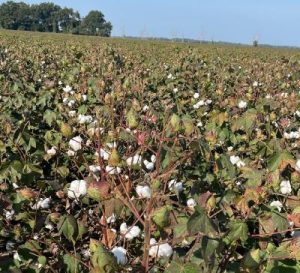
A more open plant canopy can have numerous positive agronomic effects, according to Raper.
“You’ll see an increased efficacy of insecticides,” he says. “They’re going to work better and kill more insects by allowing more of the product to penetrate the canopy.”
And, says Raper, lowering the seedling rate can shorten the season on a cotton crop — limiting the timeframe in which a cotton plant is most vulnerable to pests.
“We’re likely going to see a shorter window of time in which we’re going to need to protect those fruiting bodies, because our effective fruiting window is shorter,” he says. “And we typically see higher insect pressure later in the year, so we will have avoided the period of time in which we typically really have to ramp up protection from insect pests.”
Reducing the seeding rate, which in turn reduces canopy structure, can also increase the efficacy of a defoliant application. Naturally, the absence of excess vegetative material on a crop row makes PGR applications simpler and more effective.
“All of this should accumulate into an earlier harvest,” Raper says.




Leave a Reply