

The cotton market cruised through this past week, keeping its head just above 70 cents, but teasing the bears just enough to keep them focused for a move below 67 cents. Likewise, the market teased the bulls with hints of moving above 72 cents. The market will continue to work in the previously established range of 67 to 72 cents.
Too, there will likely be enough movement just above and below that range, keeping both the bears and the bulls interested in the market. Trading volume has shrunk, but the market still flirts along filling needs, mostly on an as-needed basis. Expect much of the same throughout the remainder of July.
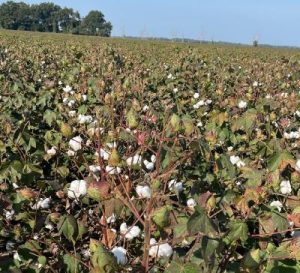
U.S. crop conditions continued to suffer, especially on the Texas plains. Rainfall continues to bypass most of that region, and while this past spring’s rains were enough to get the plants off to a decent start, the total lack of subsoil moisture is taking its toll. As much as two-thirds of that crop must have near bi-weekly showers just to survive. As was the case last year, supplementation irrigation without rainfall will not be sufficient.
As was forecast earlier in the year, the Texas drought has spread into the U.S. Mid-South region. Overall, the South Delta has received adequate moisture, but the North Delta has lacked moisture and the crop in that region is under yield-reducing stress. The U.S. crop experienced further deterioration this week, marking the third consecutive week of declining crop conditions.
On the international scene, India is limiting its export activity and China has been the monopoly buyer of anything India offers. The Indian monsoon rains are 30% below normal for this time of year. This not a great worry yet, but much more of this will lead to lower yields.
Nevertheless, as cotton is a very drought-tolerant crop, a poor monsoon could actually prompt Indian producers to plant more cotton, if they decide it is too dry for other crops.
Dr. O.A. Cleveland is a Professor Emeritus, Department of Agricultural Economics, Mississippi State University.





Leave a Reply